How to set up a new aquarium
From empty box to thriving tank. A step-by-step guide to setting up a freshwater aquarium from scratch, covering what to buy, how to assemble it, how to cycle it, and how to add your first fish.
Published 6 June 2026 · Last updated 23 July 2026 · 16 min read
The honest timeline
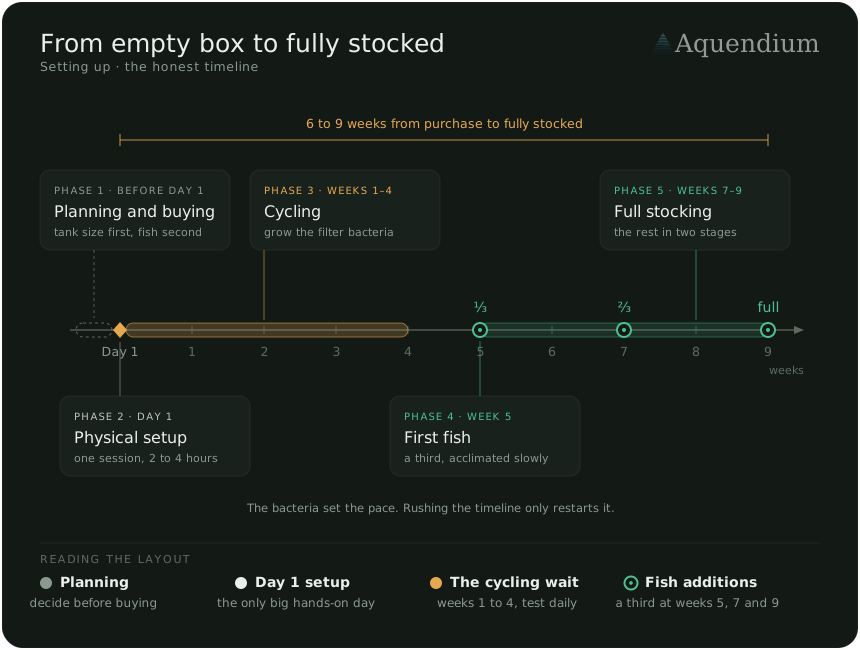
The biggest surprise for new fishkeepers is how long it takes. Pet shops sell tanks and fish on the same day. YouTube shows finished tanks in five-minute setup montages. The reality is slower: a properly established freshwater aquarium takes 6 to 9 weeks from purchase to fully stocked, and most of that time is spent waiting for natural processes that cannot be rushed.
Here is the honest schedule:
- Day 1: physical setup (tank, substrate, equipment, water)
- Weeks 1 to 4: cycling, which grows the beneficial bacteria that keep your fish alive
- Week 5: add the first third of your intended fish
- Week 7: add the second third
- Week 9: add the final third
Phase 1: Planning and buying
Before you buy anything, two decisions shape everything else: tank size and species. Get these right and the rest follows naturally. Get them wrong and you will fight your setup forever.
Choose your tank size first, fish second
The common mistake is choosing fish first, then trying to squeeze them into a tank. Do the opposite. Pick a tank size you can comfortably fit, afford, and maintain, then choose fish suited to that size.
Honest tank-size guidance:
- Under 40 litres: only suitable for specific setups, such as a single betta, a small cherry shrimp colony, or a school of tiny fish like chili rasboras. Avoid this as a first community tank. Small tanks are harder to keep stable, not easier.
- 40 to 75 litres: an entry-level community tank. Fine for small groups of nano fish (ember tetras, harlequin rasboras) plus a few shrimp or snails. This is the smallest size most experienced keepers would recommend.
- 75 to 150 litres: the sweet spot for a first proper community tank. Stable water, forgiving of mistakes, broad choice of fish, easy to maintain.
- 150 litres and up: excellent for a centrepiece species (angelfish, larger gouramis, dwarf cichlids) or a genuinely varied community.
Choose your species before buying anything else
Your fish decide your equipment. Tropical fish need a heater; cool-water fish do not. Soft-water fish need different substrate to hard-water fish. Messy, high-waste fish need oversized filtration; small tidy fish do not.
See our guide on choosing your first fish for detailed recommendations, and our stocking calculator to check a planned community fits your tank. The short version: pick fish suited to your tank size and your local tap water, and prioritise species that are hardy and peaceful.
The essential equipment list
You need genuinely less equipment than chain pet shops suggest. The real essentials:
The tank itself. A standard rectangular glass tank is easier to maintain than a tall, narrow, or oddly shaped one, and glass is more durable than acrylic for home use. Tanks with a braced rim are stronger but slightly harder to plant; rimless tanks look cleaner but cost more. For a first tank, a standard rectangular glass tank from any reputable Australian aquarium retailer is perfect.
A filter rated for your tank size or larger. There are three common types: hang-on-back filters (cheap, easy to maintain, slightly noisy, fine under 100 L), internal filters (quiet, fine for most tanks), and external canister filters (pricier, most powerful, best over 100 L). For a first tank, a hang-on-back or internal filter is enough. Buy one rated for at least your tank's size. Slightly oversized is better than slightly undersized.
A heater (for tropical setups) sized to your tank. Use our heater wattage calculator to size it correctly. Trusted brands include Eheim, Aqua One, and Aquatop.
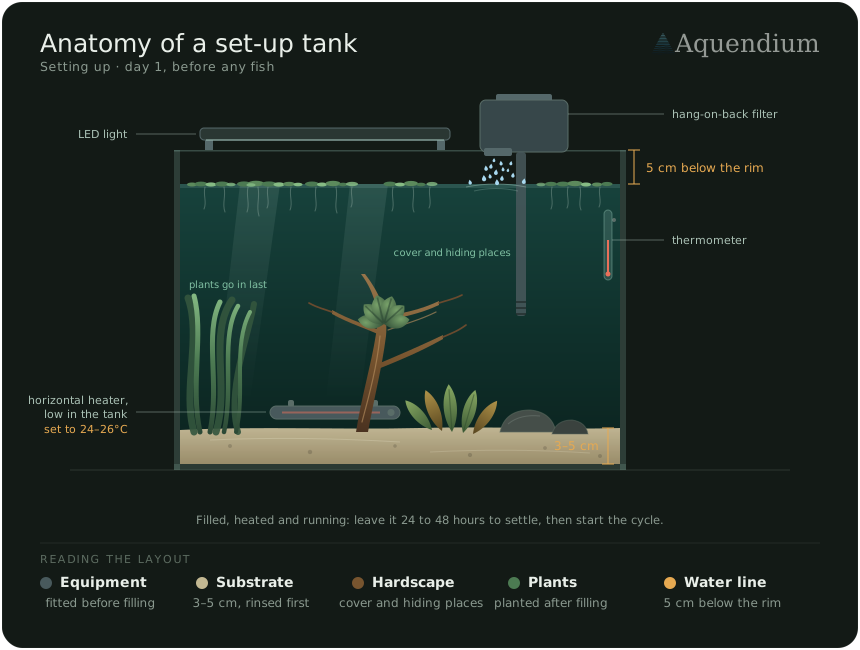
Substrate. For community tanks, use either fine smooth gravel or aquarium sand. Avoid sharp gravel (it damages bottom-dwellers' barbels), unwashed builder's sand (too fine, clouds the water), and pH-altering substrates (only worth it if you specifically need acidic water for soft-water fish). Aim for about 3 to 5 cm deep, a little deeper for heavily planted tanks.
A light. Most tanks come with a basic LED light, which is fine for a fish-only setup. For a planted tank you will eventually want a dedicated plant-spectrum LED, but you do not need it on day one.
A water test kit. Get the API Freshwater Master Test Kit, the most widely used kit in Australian fishkeeping and stocked in most aquarium shops. It tests pH, ammonia, nitrite, and nitrate: the four numbers you will watch through cycling and beyond. Buy the liquid kit, not test strips, which are too imprecise to trust.
Dechlorinator. Seachem Prime is the standard choice and is widely available in Australia. A small bottle treats thousands of litres and lasts most keepers a year. This is non-optional for any tank filled with tap water.
A thermometer. A simple stick-on or floating thermometer, placed on the opposite side of the tank from the heater. Do not trust the heater's own dial; trust the thermometer.
A gravel vacuum and a dedicated bucket. For water changes. The bucket must be used only for the aquarium, because household buckets often carry soap residue that kills fish.
Some decor and hiding places. Driftwood, aquarium-safe rocks (avoid limestone in soft-water tanks), and live or silk plants. Fish need places to hide, especially during the stress of moving in.
Equipment to skip for now
The shop will try to sell you plenty of extras. Most are unnecessary on day one:
- UV sterilisers: only useful for specific algae or disease problems you do not have yet
- CO2 systems: only relevant for advanced planted tanks
- Protein skimmers: this is saltwater equipment and does nothing in freshwater
- Automatic feeders: handy when you travel, not needed day to day
- "Cycling boosters" promising an instant cycle: see the cycling section below for the honest answer
- "Stress coat" and similar tonics: Seachem Prime already does what most of these claim
Phase 2: Physical setup
Once your equipment is home, the physical setup happens in one session, usually 2 to 4 hours from empty box to filled tank.
Step 1: Position the tank before filling
Decide where the tank will live before you add water. A full aquarium weighs roughly 1 kilogram per litre, so a 100-litre tank is over 100 kg with equipment. Move it to its final spot now, while it is empty and light.
Choose a location that is level, strong enough to hold the weight, out of direct sunlight (which causes algae blooms), away from heating and cooling vents (which cause temperature swings), and near both a power point and a tap (you will do water changes often). If the tank sits on a stand or cabinet, check the surface is truly level with a spirit level. An out-of-level tank stresses the glass and can crack the seams over time.
Step 2: Rinse everything
Rinse the empty tank with plain water (never soap) to remove manufacturing dust. Rinse all decor, rocks, and driftwood. Rinse the substrate in a colander or bucket until the water runs reasonably clear. Both gravel and sand ship with a lot of dust that will cloud your tank for days if you skip this.
Driftwood often keeps releasing tannins (a yellow-brown tint) for weeks no matter how long you soak it. This is harmless, and even slightly good for soft-water fish, but if you want crystal-clear water, soak driftwood in a separate bucket for a few days before installing it.
Step 3: Add substrate
Spread the substrate across the tank floor at 3 to 5 cm deep, slightly deeper toward the back to add depth. If you are planning a planted tank, sloping it higher at the back gives a nice sense of perspective.
Step 4: Position hardscape (rocks, driftwood, decor)
Arrange your hardscape before adding water; it is far easier to see what you are doing in an empty tank. Plan for plenty of hiding spots, because new fish are stressed and need cover. The classic mistake is sparse decor that leaves fish exposed, so err toward more hiding places than you think you need. If you want the layout to look composed rather than merely functional, our beginner's guide to aquascaping covers the rules that make one work.
To secure rocks and driftwood, or to attach plants like Anubias and Java fern to hardscape, use cyanoacrylate gel super glue (the gel form, not the liquid). It cures instantly on contact with water and is genuinely aquarium-safe once set; it is the same chemistry used in surgical skin glue. Standard brand-name gels (Loctite Gel Control, Selleys Quick Fix Gel, Bostik Super Glue Gel) all work, as long as the only listed ingredient is ethyl cyanoacrylate. Avoid any glue marked "extra strength" or "fast-bond" that lists extra solvents or additives, which can leach into the water. Aquarium-branded glues (Seachem Reef Glue, ADA Wood Tight) are the same thing at a premium price and work no better.
Step 5: Install equipment
Install the filter following its instructions; it usually hangs on the back or sits in a corner. Install the heater horizontally near the bottom of the tank, because heat rises and a low position gives better circulation. Do not plug anything in yet.
Step 6: Fill the tank slowly
Place a small plate or bowl on the substrate and pour the water onto it. This stops the stream from blasting craters in your substrate. Use room-temperature water for this first fill (later water changes will need temperature-matched water, but room temperature is fine to start). Fill to about 5 cm below the rim.
Step 7: Dechlorinate
Add dechlorinator at the dose on the label, calculated for your full tank volume for this first fill. Stir gently.
Step 8: Plant live plants if you are using them
If you are using live plants, plant them now, while the water is in but the equipment is still off. Sand and fine gravel are easier to plant in than coarse gravel. Do not worry about getting them perfect; they will grow into position over the coming weeks.
Step 9: Start the filter and heater
Plug in the filter and check the flow looks healthy. Plug in the heater and set it to your target temperature (24 to 26°C for most tropical community tanks). Add the thermometer so you can monitor it.
Now leave the tank running for 24 to 48 hours before doing anything else. This lets the water clear, the equipment settle, and the temperature stabilise.
Phase 3: Cycling
This is the part everyone wants to skip and nobody can. A new tank has no biological filter, meaning no beneficial bacteria to turn toxic ammonia (from fish waste) into far less toxic nitrate. Adding fish to an uncycled tank is the single most common cause of beginner fish deaths.
Cycling usually takes 4 to 6 weeks and cannot be meaningfully shortened. See our complete cycling guide for the full procedure. The short version:
Step 1: Add an ammonia source
To grow the bacteria, you have to feed them. Two methods:
- Pure ammonia method: dose pure ammonium chloride (sold for aquarium cycling, such as Dr Tim's Ammonium Chloride or Fritz Fishless Fuel) to reach 2 ppm in your tank. This is faster, more controllable, and the modern best practice. Plain household ammonia can work too, but only if it is pure ammonia with no fragrance, colouring, or detergent, which many are not, so check the label carefully.
- Fish food method: drop a pinch of fish food into the tank every 2 to 3 days. As it decomposes it produces ammonia. Slower and less precise, but it uses materials you would be buying anyway.
Step 2: Test daily and wait
Test ammonia, nitrite, and nitrate daily. You will see ammonia rise, then nitrite rise as the first bacteria establish, then nitrate rise as the second wave establish. The cycle is finished when a dose of ammonia drops to zero ammonia and zero nitrite within 24 hours, with nitrate climbing.
Step 3: Do a large water change before adding fish
Once cycled, your nitrate will be high (often 80 ppm or more). Do a 50% water change with dechlorinated water to bring nitrate down to a safe level before any fish arrive.
The honest truth about "cycling boosters"
Products labelled "instant cycle" or "cycle starter" promise to short-circuit the process. The honest assessment: bottled bacteria such as Tetra SafeStart genuinely contain living nitrifying bacteria and can shorten a cycle by a week or two when used correctly. They do not make cycling instant, but they help.
Older or cheaper "cycle starter" products are less reliable, because bottled bacteria has a real shelf life and many bottles have sat on shelves too long to work. If you use one, buy the freshest stock you can find, keep it refrigerated, and treat it as a head start rather than a replacement for proper cycling.
Phase 4: Adding your first fish
Once your tank is cycled and you have done a large water change, you can add the first wave of fish. This is the moment all the preparation has been building toward.
Step 1: Do not buy everything at once
Even in a fully cycled tank, your bacteria colony is only sized for the ammonia load you used to cycle. Adding all your fish in one trip overwhelms the colony and causes a mini-cycle: small ammonia and nitrite spikes that stress the fish.
For a community tank, add roughly a third of your intended fish now, another third in two weeks, and the final third in four weeks.
Step 2: Choose healthy fish from the shop
The fish you bring home is only as healthy as the shop you bought it from. See our guide on buying healthy fish for the full checklist. In brief: look for active fish with intact fins and no white spots, check there are no dead or dying fish in the same shop tank, and ask how long the fish have been in store.
Step 3: Acclimate properly at home
Fish in a transport bag have already been through stress and changes in temperature and water chemistry. Tipping them straight into your tank adds one more shock.
The drip-acclimation method is safest. Float the sealed bag in your tank for 15 to 20 minutes to match the temperature. Then, over 30 to 60 minutes, gradually mix small amounts of tank water into the bag (a few tablespoons every 5 minutes). Finally, net the fish out and release them into the tank, discarding the bag water rather than pouring it in, so you do not introduce shop diseases.
Step 4: Watch carefully for the next week
Test ammonia and nitrite daily for the first week or two after adding fish. If either becomes detectable, do an immediate water change and dose Seachem Prime; your bacteria colony is still adjusting to the new load.
Do not feed for the first 24 hours. Stressed fish usually will not eat anyway, and uneaten food pollutes the water at the worst possible moment.
Phase 5: Building toward your full stocking
Over the following weeks, add the rest of your fish in stages. Test before each addition. If your readings stay stable, go ahead; if not, wait longer before the next group.
Once your full stocking is in place, switch from daily testing to weekly nitrate checks (a sanity check before water changes) and monthly pH, GH, and KH checks. See our water parameters guide for the complete reference.
From here, your routine becomes:
- Daily: feed once (only as much as the fish eat in 2 to 3 minutes), watch for any signs of stress or illness, and check the temperature
- Weekly: a 25% water change with dechlorinated, temperature-matched water (see our water changes guide), and wipe algae off the glass if needed
- Monthly: rinse the filter media in old tank water (never tap water), check the equipment, and prune plants if you have them
For this routine as a checklist you can tick off, with the occasional every-few-months jobs added, see our aquarium maintenance schedule.
What not to buy (common starter-kit mistakes)
The honest list of products that look reasonable but cause problems:
"All-in-one" starter kits with tiny tanks
Kits sold as "first aquariums" often include a tank under 20 litres with built-in filtration and a goldfish or betta on the box. These small tanks are harder to maintain than larger ones, and the included filters are usually too weak. Buy a proper 40 L or larger tank with separate equipment instead.
"Cycling fish" or "starter fish"
Some shops still suggest adding a few "hardy fish" to a new tank to cycle it. This is cruel: those fish suffer through the ammonia and nitrite spikes you are trying to prevent. Use fishless cycling.
Goldfish for a "starter tank"
Goldfish are cold-water fish that grow to 30 cm, live 15 years or more, and produce enormous amounts of waste. They are not suitable for "starter tanks" under 200 L. If you specifically want goldfish, plan a 200 L or larger unheated tank from the start. See our goldfish care guide for what keeping them properly involves.
Common plecos as "algae cleaners"
Fish sold simply as "plecos" at chain shops are almost always common plecos (Hypostomus plecostomus), which reach 60 cm and need 750 L or larger tanks. For a community-tank algae eater, buy a bristlenose pleco instead, which stays around 12 cm.
Bettas in "betta cubes"
The 1 to 2 litre cube tanks sold for bettas are inhumane. A betta needs at least 30 litres, with a heater and a gentle filter. Do not buy the cubes, however convenient they look. Our betta care guide covers keeping one properly.
Coloured gravel that fades and stains
Bright dyed gravel often fades over months and can stain silicone seams. Natural-coloured gravel or sand looks better long-term and usually costs less.
Plastic plants that damage fish
Cheap plastic plants often have sharp edges that tear fins, especially on long-finned fish like bettas and gouramis. Silk plants are safer; live plants are best.
Australian-specific considerations
A few things worth knowing if you are setting up in Australia specifically:
Your tap water determines everything. Most of Australia has alkaline, mineral-rich tap water (Brisbane, Gold Coast, Adelaide, Perth), which strongly favours hard-water fish (livebearers, snails, African cichlids) and makes soft-water fish (neon tetras, discus, shrimp) much harder to keep. Test your tap water before buying fish. See our water parameters guide for regional profiles, and our best freshwater fish for Australian tap water guide for species suited to each region.
Chloramine, not chlorine, is now standard. Most Australian water supplies use chloramine to disinfect. Chlorine evaporates if water is left to stand; chloramine does not. A dechlorinator that handles chloramine, like Seachem Prime, is non-negotiable.
Check local restrictions before buying fish. Some species are restricted in certain states because of invasive risk. Weather loaches are restricted in Victoria, and some snails are restricted in various states. Major retailers know their local rules, but it is worth confirming for any unusual species.
Use Australian-certified equipment. All aquarium gear sold in Australia should be certified for 240 V mains. Avoid imported equipment from overseas marketplaces (eBay, AliExpress) that may not be electrically safe. Water and electricity is not the place to economise.
Climate matters for unheated tanks. South East Queensland and northern Australia rarely need a heater for tropical fish in summer; southern states need one year-round. Cool-water fish (white cloud minnows, weather loaches, rosy barbs) do well in unheated tanks across most of southern Australia.
Once your tank is set up and cycled, see our guides on water changes, water parameters, choosing your first fish, and common fish diseases. For individual species' care requirements, browse our species directory.