Common fish diseases
A symptom-first guide to identifying and treating common freshwater aquarium fish diseases: what to look for, what's likely causing it, and what to do next.
Published 6 June 2026 · Last updated 19 August 2026 · 20 min read
If your fish looks sick: the first thing to do
Before reaching for medications, test your water. The single most common cause of fish illness is poor water quality, not infectious disease. Ammonia, nitrite, or nitrate spikes cause symptoms that look like disease (gasping, lethargy, loss of appetite, even visible damage) but cannot be cured by medication. Adding medication to a tank with bad water makes things worse, not better.
The diagnostic order is:
- Test water immediately. Ammonia, nitrite, nitrate, pH, and temperature. If anything is off, this is your problem.
- Do a large water change (50%) with properly dechlorinated, temperature-matched water. This addresses water quality issues immediately and gives medication-free time to observe what's actually happening.
- Observe carefully over the next 24-48 hours. Many "diseases" disappear when water quality is restored. What remains is genuinely a disease.
- Identify what you're actually looking at using this guide before treating anything.
- Treat only what you've correctly identified. Wrong medications stress fish further and waste time during which the actual problem worsens.
This sequence matters because reaching for medications without water testing kills more fish than it saves. Most experienced keepers will tell you: when in doubt, do a water change.
One thing to rule out first: if what worried you is moving around the tank rather than sitting on a fish, it is probably not a disease at all. Small worms, specks and stalks on the glass or in the substrate are usually harmless hitchhikers, and our guide to aquarium pests and hitchhikers covers what they are and which few are worth acting on.
Identify by symptom
Start with the photos: click the picture to enlarge it, or click the name underneath to jump to that disease's full section. Each section contains both the symptom description and the likely disease, including treatment approach.
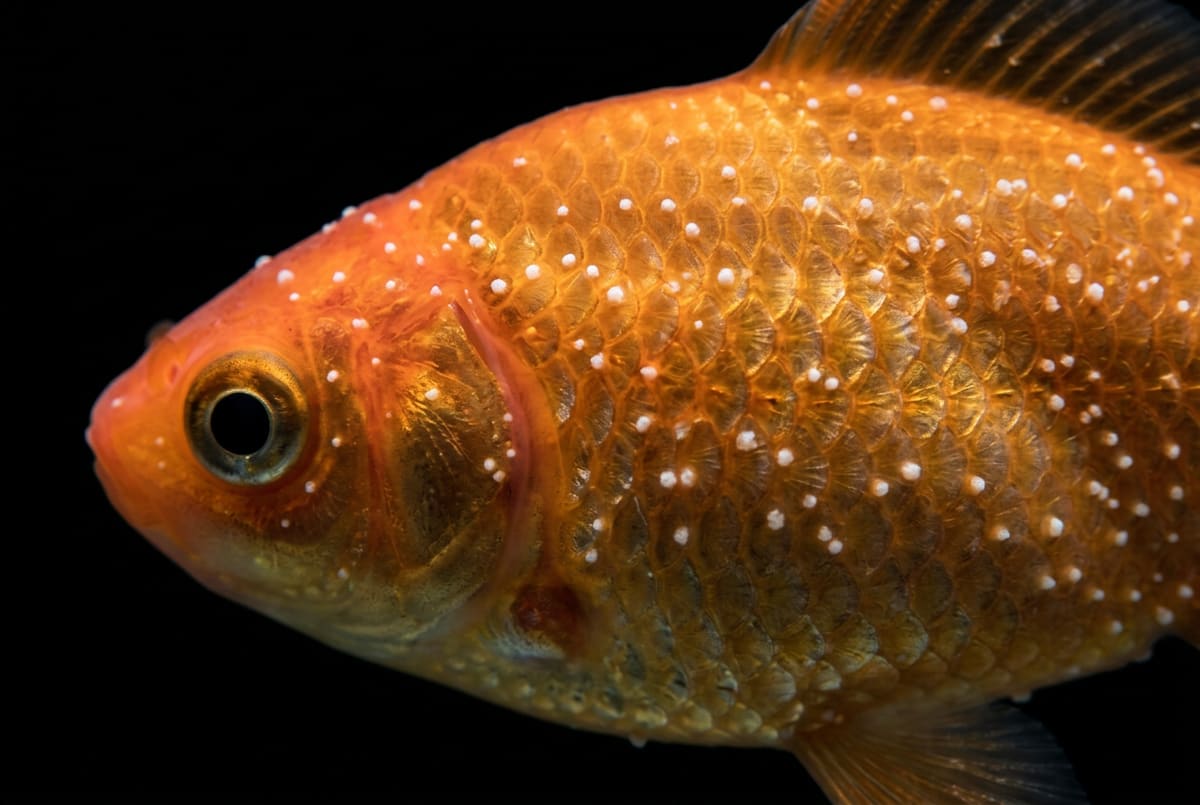
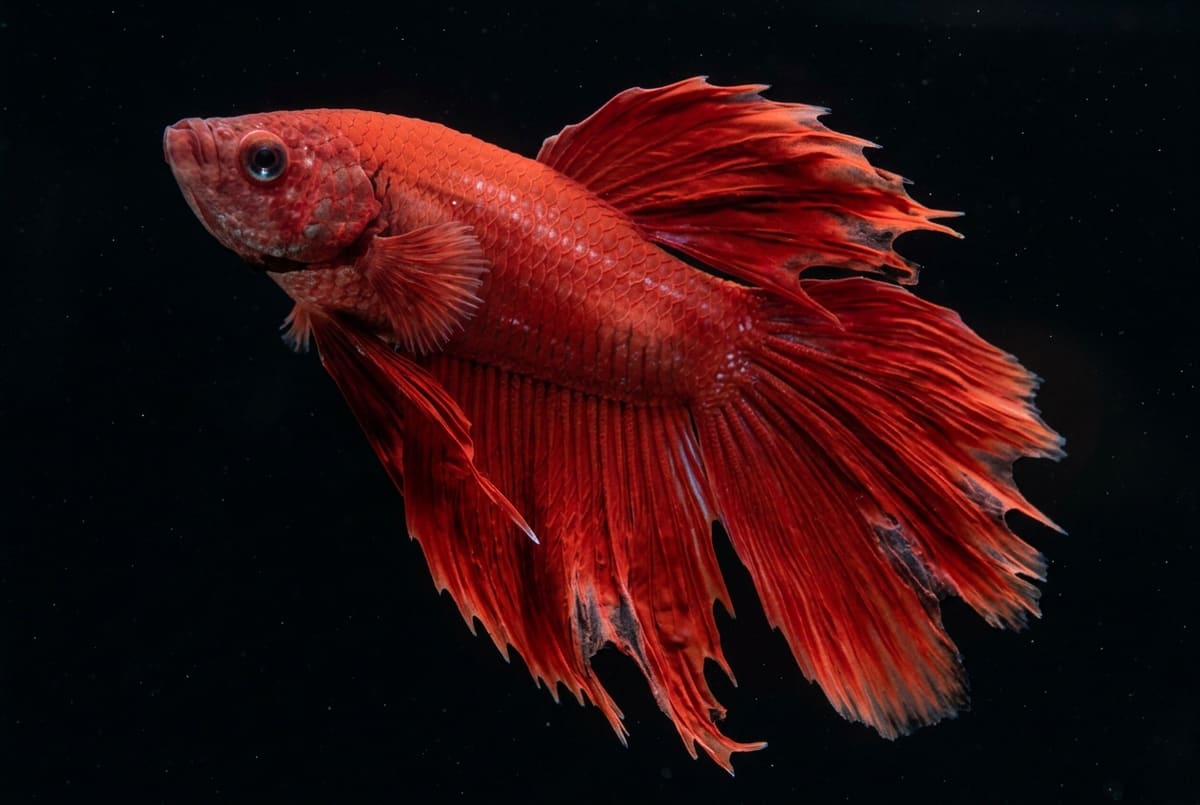
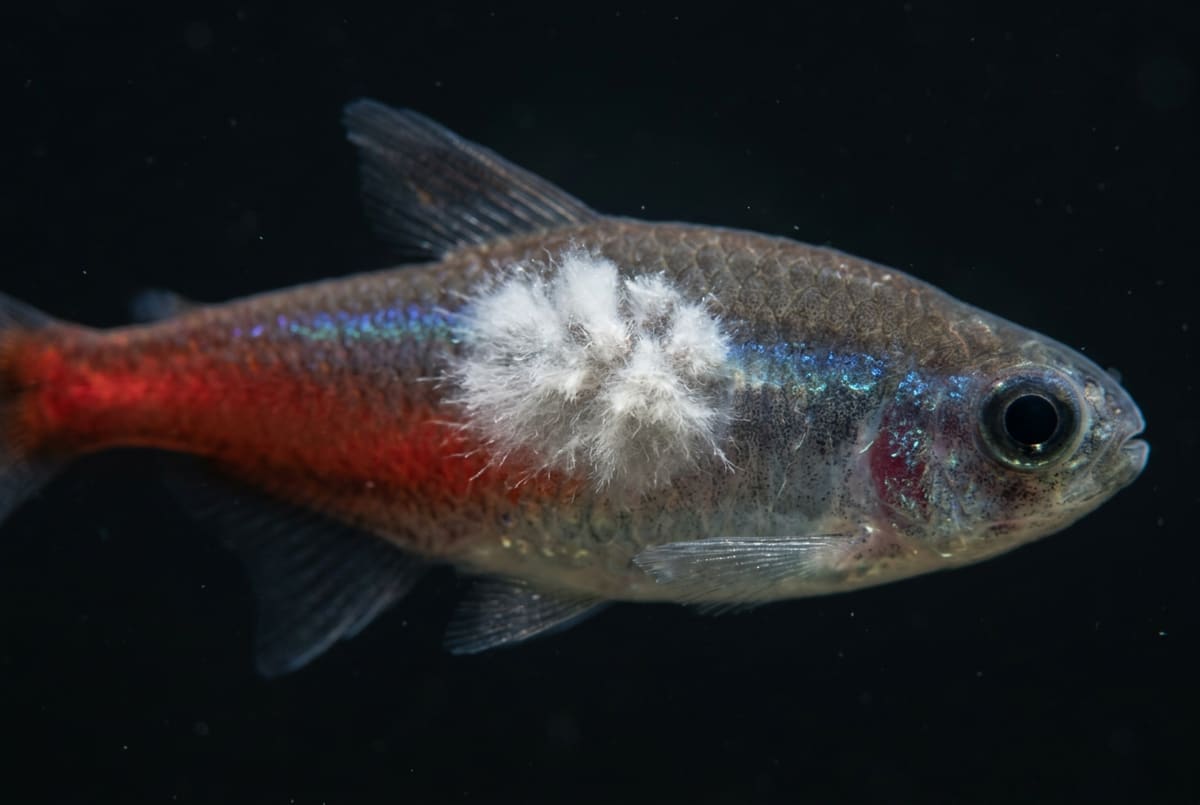
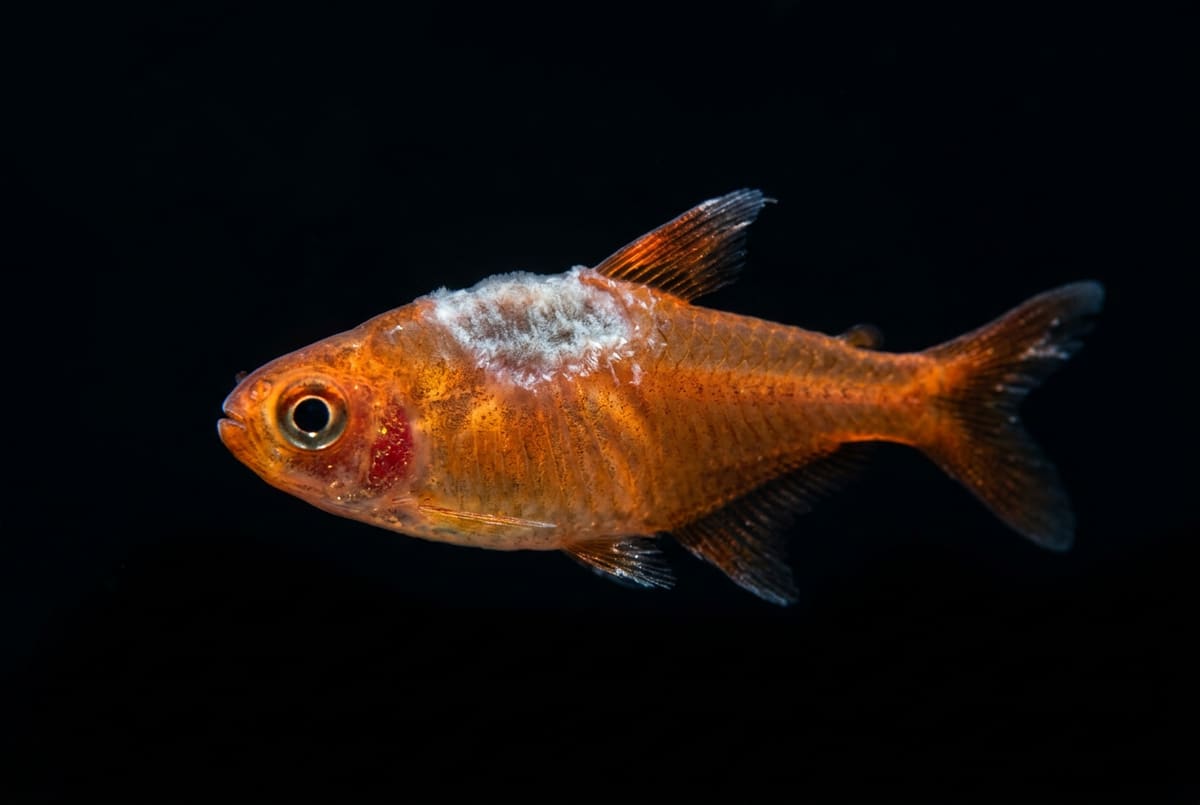
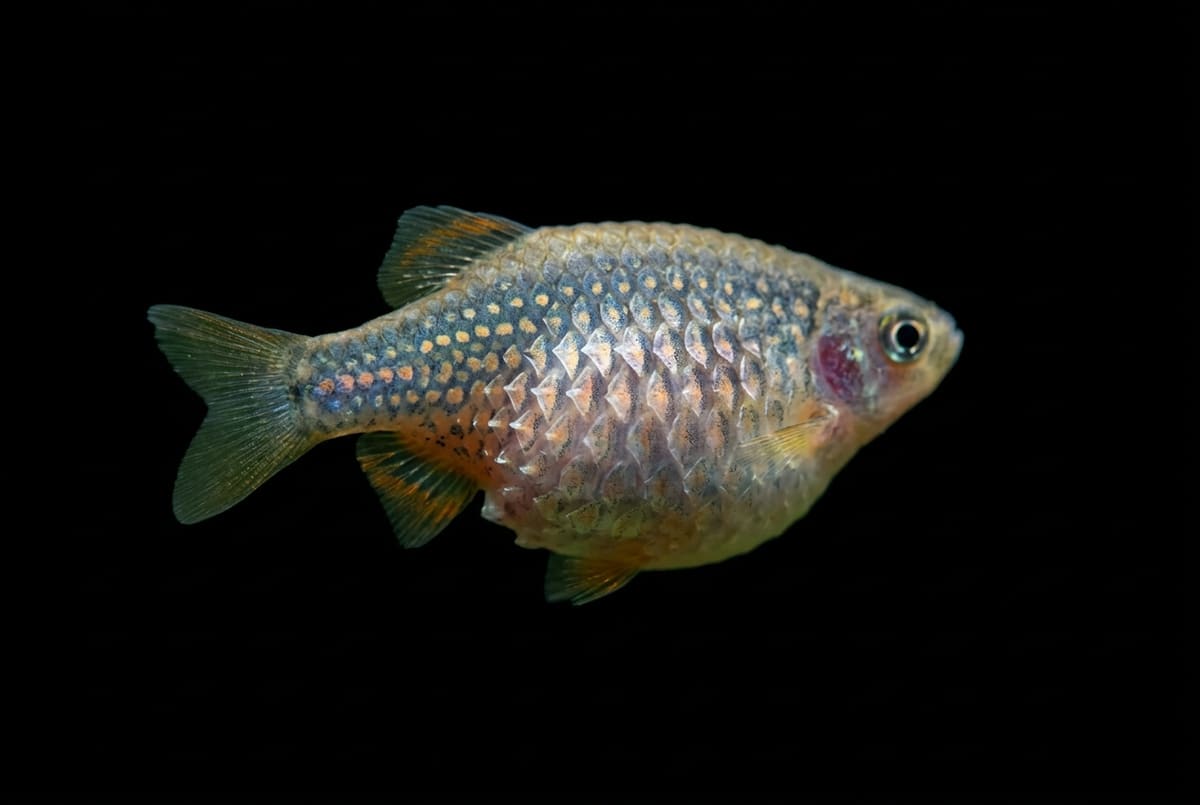
My fish has small white spots like grains of salt Likely ich
What you're seeing
Tiny white spots (about 1mm across) covering the body and fins, typically appearing first as just one or two before spreading rapidly across the fish. The fish may flash (scrape against decor) and show increased gill movement.
What it is: ich (white spot disease)
Ichthyophthirius multifiliis is a parasite with a temperature-dependent life cycle. The visible white spots are encysted parasites in fish tissue, invulnerable to medication. The vulnerable stage is the free-swimming "theront" released when spots burst. This is what treatment must target across 10-14 days.
Treatment approach
Raise temperature to 28-30°C for species that tolerate it (this accelerates the parasite life cycle, shortening treatment time). Use a commercial ich medication following the product's specific instructions for the full course. Do not stop when spots disappear; continue for several days after. Many keepers add aquarium salt at low doses alongside medication; salt is genuinely effective for ich on species that tolerate it, but is harmful to many catfish and shrimp.
Common mistake: Stopping treatment when spots disappear. The parasite has simply entered the encysted stage; without continued treatment, it returns within days.
My fish's fins look ragged or eroded Likely fin rot
What you're seeing
Fin damage starts as a slightly ragged or discoloured edge, often with a faint white or grey margin. Progresses to obvious fin erosion, with chunks missing or fin tissue rotting back toward the body. The fish may also show clamped fins or reduced activity.
If the damage appeared suddenly rather than gradually (particularly as crescent-shaped bites or large torn pieces), this is fin nipping by tankmates, not disease. Look at your stocking; common culprits are tiger barbs, serpae tetras, and overcrowded danios attacking long-finned species. The fix is rehoming the aggressor, not medication.
What it is: fin rot
A bacterial infection caused by opportunistic bacteria (often Aeromonas, Pseudomonas, or Vibrio species) that attack stressed or injured fish. Fin rot is functionally a water-quality disease, not an infectious one: the bacteria are present in every tank but only attack compromised fish.
Treatment approach
Address the underlying water issue first: large water changes, restore parameters, identify and remove any aggression source. For mild cases (small amount of fin damage), water quality alone often resolves the problem within 1-2 weeks. For advanced cases (significant erosion, body damage), antibacterial medication is appropriate alongside water improvement.
Common mistake: Medicating without fixing water quality. The bacteria will return as soon as treatment stops if the underlying environmental issue isn't addressed.
My fish has fuzzy cotton-wool-like growth Likely fungal infection
What you're seeing
Distinctive fuzzy white growth that looks like cotton wool or fine mould, typically on the body, fins, or around the mouth. Often appears after physical injury or alongside other stressors.
If the white patches are flatter and more skin-like rather than fluffy, particularly around the mouth or in a saddle-shape across the body, this is likely columnaris (see next section) rather than fungus. The distinction matters because columnaris is bacterial and progresses much faster.
What it is: fungal infection
True fungal infection (usually Saprolegnia or related species) typically appears at sites of injury, dead tissue, or unfertilised eggs. Healthy fish are resistant: fungus is an opportunistic infection of already-compromised tissue.
Treatment approach
Improve water quality. Treat the underlying injury or stress that allowed the fungus to take hold. Commercial antifungal treatments (such as methylene blue baths or commercial antifungal products) work well for localised infections. Salt baths help on species that tolerate salt.
Common mistake: Mistaking columnaris for fungus and treating with antifungal medication, which doesn't address the bacterial cause. The fish often dies during the delay.
My fish has flat white patches, especially around the mouth Likely columnaris
What you're seeing
Flat white or grey patches that look skin-like rather than fuzzy, often around the mouth (sometimes called "mouth fungus" despite being bacterial), in a saddle shape across the back, or on fins. Fish may also show rapid breathing and lethargy.
What it is: columnaris
A bacterial infection (Flavobacterium columnare) that's highly contagious and can kill fish within 24-48 hours in acute cases. Significantly more dangerous than the fungal infection it's often mistaken for.
Treatment approach
Urgent. Improve water quality immediately (large water change). Lower temperature slightly if possible, as columnaris is more aggressive at higher temperatures. Treat with an antibacterial medication effective against gram-negative bacteria. Kanamycin and certain other antibiotics are commonly used internationally, but availability varies in Australia (see Australian medication section).
Common mistake: Treating as fungus, losing critical days while the bacterial infection progresses.
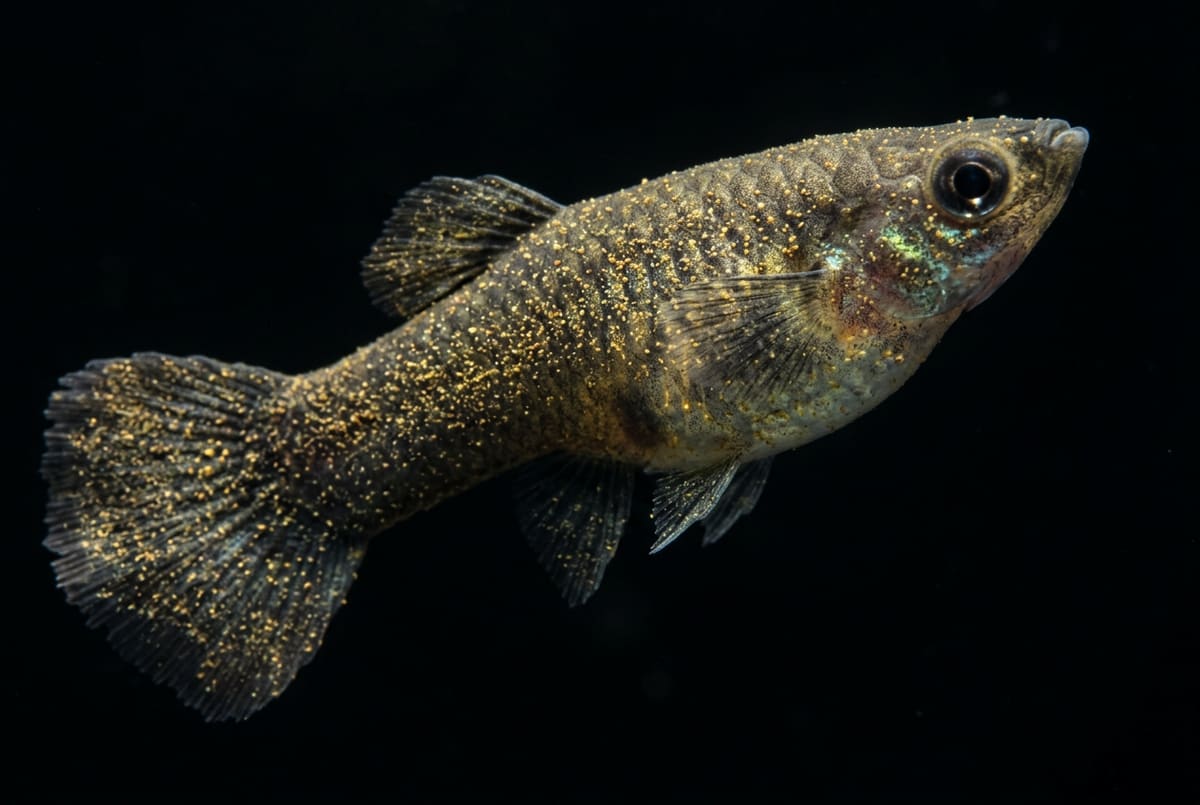
My fish looks dusted in gold or rust colour Likely velvet
What you're seeing
Fine golden or rust-coloured dust covering the body, often more visible under direct light at an angle. Fish may show flashing, rapid breathing, and lethargy.
What it is: velvet (oodinium)
A parasite (Piscinoodinium or Amyloodinium) significantly more dangerous than ich. Velvet attacks gills before becoming visible on the body, so by the time you see the golden dust, the fish may already have severe gill damage. Highly contagious and can wipe out a tank quickly.
Treatment approach
Urgent. Velvet parasites use photosynthesis, so darkening the tank significantly impairs their reproduction: black out the tank entirely for the duration of treatment. Raise temperature slightly. Treat with a copper-based medication (the standard velvet treatment), following product instructions exactly.
Common mistake: Not removing invertebrates before copper treatment, killing the shrimp and snails alongside the parasites.
My fish is bloated with scales sticking out like a pinecone Likely dropsy
What you're seeing
The fish's body becomes swollen and, crucially, the scales begin protruding outward, giving a pinecone-like appearance when viewed from above. The fish may also become lethargic, lose colour, and stop eating.
If the fish is bloated but the scales aren't sticking out, the problem is usually digestive rather than systemic. See the swim bladder / constipation section below.
What it is: dropsy
Not a single disease but a symptom of severe internal organ failure (usually kidney), causing fluid retention that bloats the body and protrudes the scales. Underlying causes include bacterial infection (often Aeromonas), viral infection, or organ failure from prolonged exposure to poor conditions.
Treatment approach
Often unsuccessful. By the time dropsy is visible, organ damage is usually irreversible. Supportive care includes isolating the fish in a hospital tank, maintaining excellent water quality, treating with a broad-spectrum antibacterial medication, and in some cases adding Epsom salt to help draw out fluid. Many keepers consider visible dropsy a humane-euthanasia situation rather than a treatable disease.
Common mistake: Aggressive medication of an already-failing fish, prolonging suffering with minimal hope of recovery.
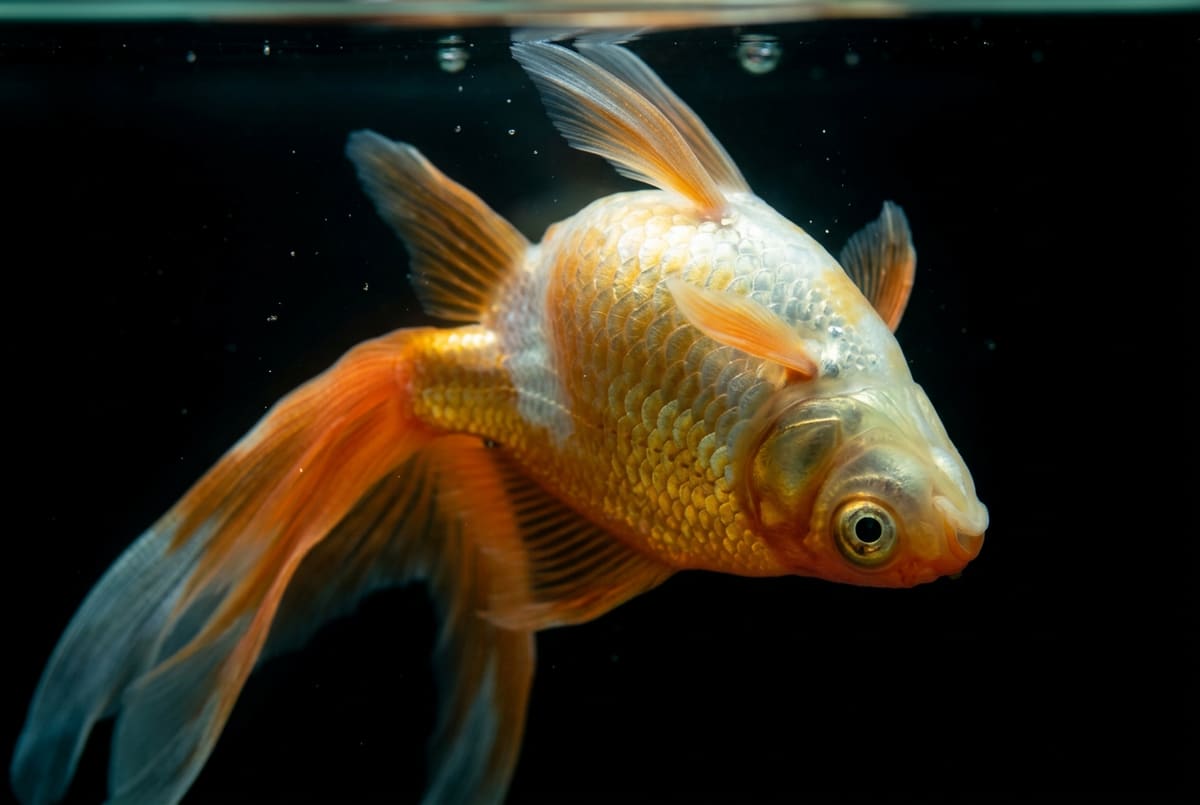
My fish can't swim normally: floating sideways, sinking, or spinning Likely swim bladder disorder
What you're seeing
The fish has obvious difficulty maintaining its position in the water: floating upside down, sinking to the bottom, or swimming in tight circles unable to right itself.
What it is: swim bladder disorder
A disorder of the gas-filled organ that controls buoyancy. Causes range from mild (overfeeding, constipation) to serious (bacterial infection, genetic deformity). Particularly common in heavily-bred species like fancy goldfish and balloon mollies due to deformed body shapes.
Treatment approach
For mild cases caused by overfeeding or constipation, fast the fish for 2-3 days, then feed a deshelled boiled pea. For persistent cases, look for underlying infection: raise temperature slightly and consider antibacterial medication if needed. Genetic swim bladder issues in heavily-bred species are usually permanent and can only be managed, not cured.
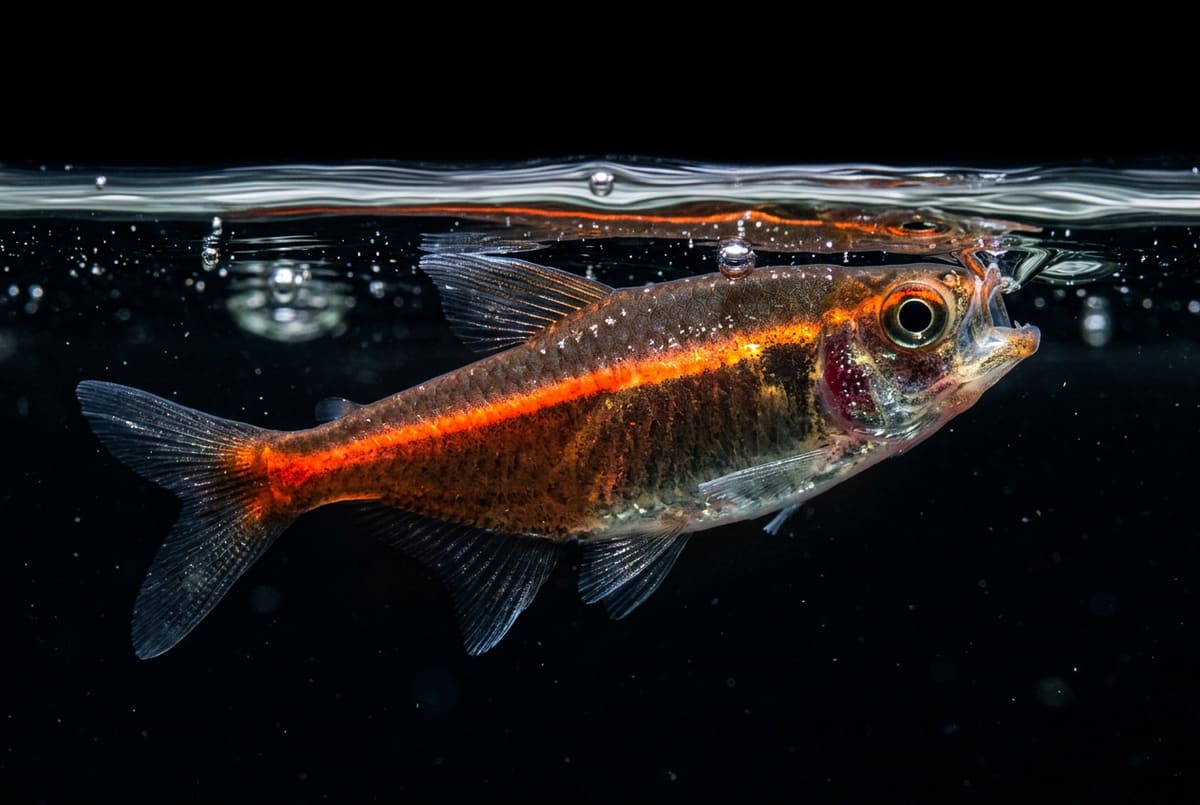
My fish is gasping at the surface Multiple possible causes
What you're seeing
Fish positioning themselves at the surface with rapid gill movement. Note: bettas, gouramis, and some catfish naturally surface to breathe atmospheric air. This is normal behaviour for these species, not a symptom.
What it likely is: oxygen deprivation
For non-labyrinth species, surface gasping indicates oxygen deprivation. Possible causes:
- Low dissolved oxygen: overcrowded tank, high temperature, poor surface agitation, or plants consuming oxygen overnight
- Ammonia or nitrite damage to gills: water testing confirms; the fish can't process oxygen through damaged gills
- Gill flukes or velvet: gill-stage parasites prevent oxygen absorption
Treatment approach
Test water immediately. If parameters are off, do a large water change. If parameters are fine, add an air stone or increase surface flow. If only some species are gasping and others are fine, look for species-specific gill damage or parasite infection.
My fish has stringy white waste or is losing weight Likely internal parasites
What you're seeing
Stringy white faeces (rather than normal coloured pellets), gradual weight loss despite normal or increased appetite, persistent bloating, and gradual decline. Often arrive with new fish, particularly wild-caught specimens.
What it is: internal parasites
Various worms and protozoa that infect fish digestive systems. Identification ideally requires microscopic examination of faeces, which most home keepers can't do, so treatment usually proceeds on suspicion rather than confirmed diagnosis.
Treatment approach
Treat with a broad-spectrum dewormer: praziquantel for most worms, metronidazole for protozoa. Quarantine for treatment because the medication affects the whole tank ecosystem. Available in Australia under various brand names sold for koi and tropical fish.
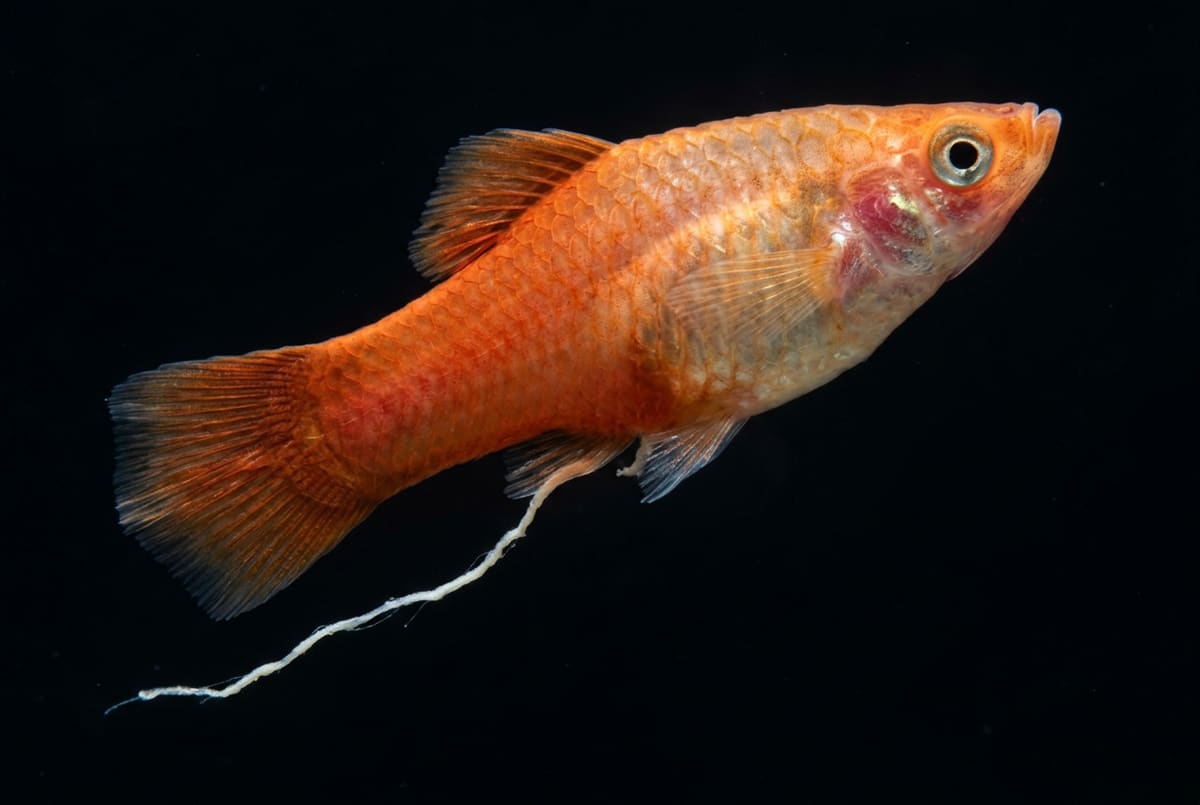
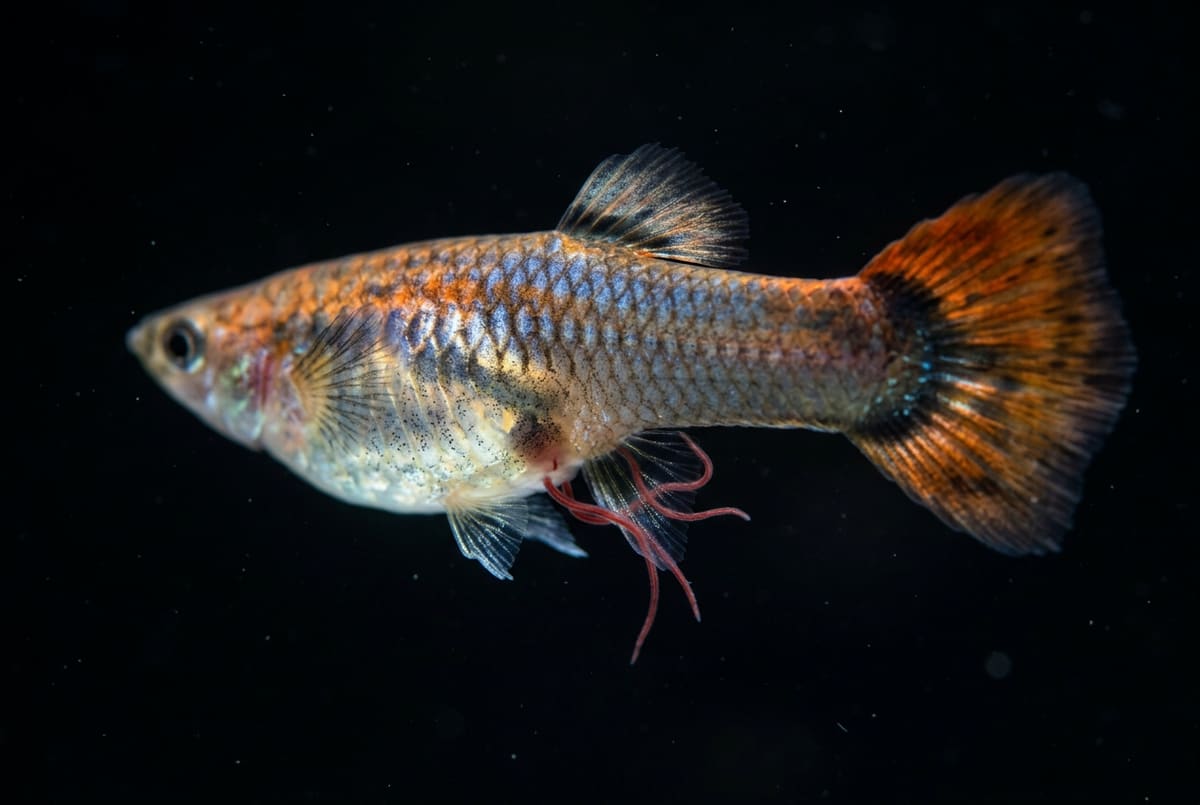
My fish has red, thread-like worms hanging from its rear Likely Camallanus worms
What you're seeing
Fine red or reddish-brown thread-like worms protruding from the vent, often most visible after the fish passes waste, sometimes in a small cluster. Alongside them you may notice a swollen or hollow-looking belly, wasting despite a good appetite, and white stringy faeces. Most common in livebearers such as guppies, mollies, platies, and swordtails, though other fish get them too.
What it is: Camallanus worms
Camallanus worms (Camallanus cotti and relatives) are live-bearing internal nematodes. They live in the gut, and the red threads you see are their tail ends poking out of the vent. They usually arrive on new livebearers and spread through a tank as larvae are released into the water, so by the time worms are visible the whole tank is generally affected.
Treatment approach
Treat the entire tank, not just the obvious fish, with a dewormer that works on nematodes. Levamisole and fenbendazole are the effective choices here; the common praziquantel-based dewormers are weak against Camallanus. Dose, wait a few days, then do a large gravel-vacuum water change to remove the paralysed worms, and repeat the course about three weeks later to catch newly hatched larvae. In Australia these are sold for fish or sourced through an aquatic vet.
Common mistake: Treating only the fish with visible worms. The parasite is already throughout the tank, so every fish needs treating, and the course must be repeated to break the life cycle.
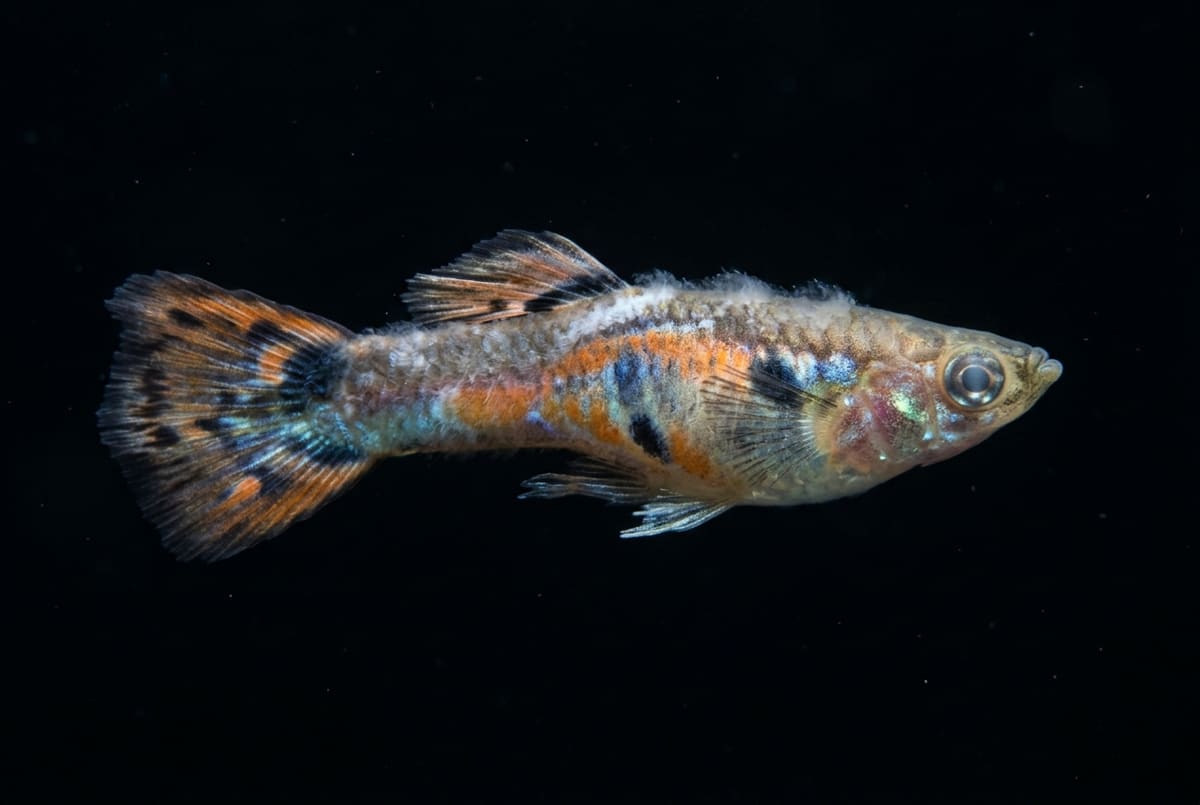
My guppy shimmies with fuzzy patches and clamped fins Likely guppy disease
What you're seeing
A livebearer that shimmies (rocking or wriggling in place without moving forward), holds its fins clamped, and develops a fuzzy or hazy film or white patches on the body that can be mistaken for fungus or ich. The fish loses condition and declines over days. Seen most in guppies and other livebearers, especially stressed or poorly kept stock.
What it is: guppy disease (Tetrahymena)
Usually an infection by the protozoan Tetrahymena, long known as "guppy disease" or "livebearer disease". It is an opportunist that takes hold in fish already weakened by stress, poor water, or chilling, and it spreads readily through fragile, inbred guppy lines. Note that the shimmies on their own, without the fuzz, is more often a water-quality or hardness problem in livebearers, so check those first.
Treatment approach
Start by fixing what let it in: correct the water quality, keep the water hard and stable for livebearers, raise the temperature gently for fish that tolerate it, and cut stress. Aquarium salt and antiparasitic treatments are used, but once Tetrahymena is established internally it is hard to clear and the outlook is poor. Prevention does most of the work: buy healthy, well-kept livebearers and quarantine new stock.
Common mistake: Treating it as fungus or ich. The fuzzy look invites the wrong medication while the underlying stress or water problem that opened the door is left unfixed.
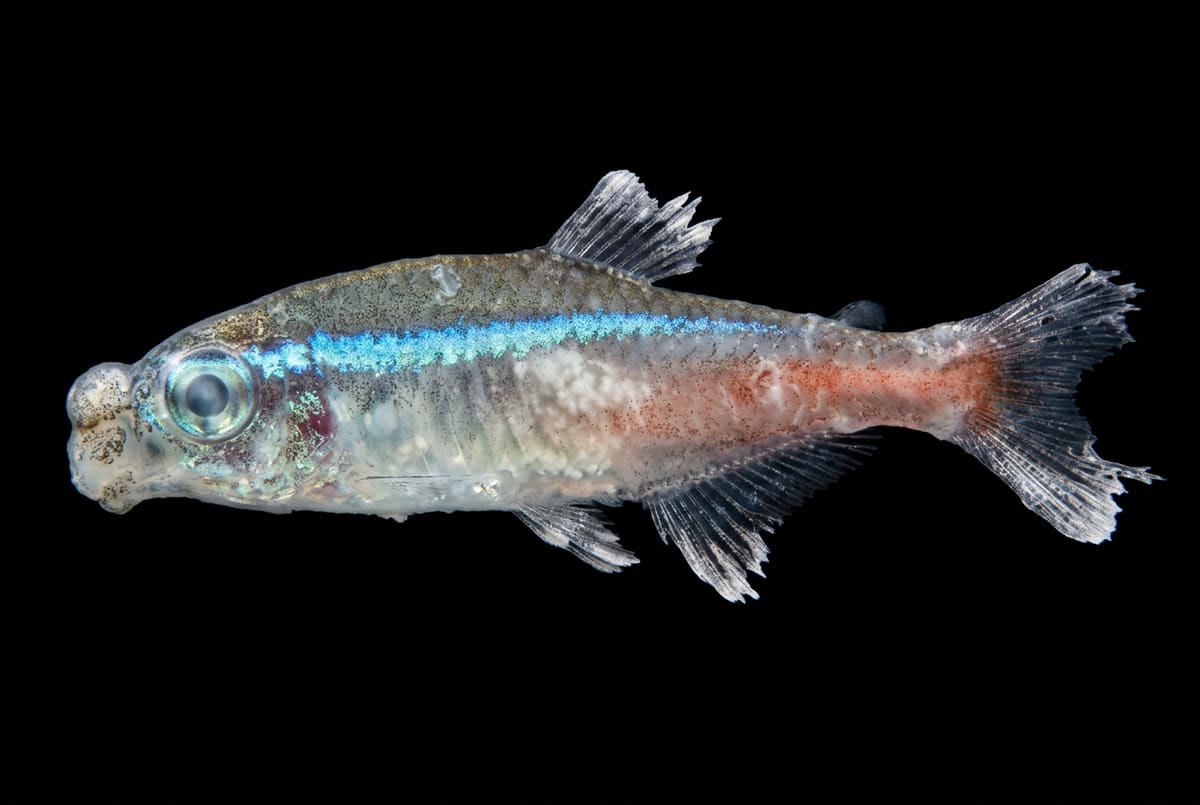
My tetra is losing colour with a pale patch along its spine Likely neon tetra disease
What you're seeing
Bright colour fading or washing out, usually starting as a pale or whitish patch along the back or spine. As it progresses the fish may develop a lumpy or curved spine, swim awkwardly, fall behind the school, and waste away. Despite the name it affects many tetras and some other fish, not only neons.
What it is: neon tetra disease
Neon tetra disease, caused by the microsporidian parasite Pleistophora hyphessobryconis. It forms cysts in the muscle, which bleach the colour and distort the body. It usually enters a tank on an infected fish, or when a healthy fish eats an infected dead one, and there is no reliable cure.
Treatment approach
There is no cure, so the response is damage control. Remove affected fish promptly, before others scavenge the bodies and pick up the parasite, keep the survivors clean and un-stressed, and quarantine new tetras before adding them. One thing to rule out: a similar colour loss caused by columnaris is sometimes called "false neon tetra disease", and unlike the real thing it can respond to antibacterial treatment.
Common mistake: Leaving a dead or dying infected fish in the tank. Healthy fish that scavenge the body take up the parasite, which is the main way it moves through a school.
My fish has stopped eating Many possible causes
What you're seeing
Loss of appetite: fish ignores food, spits it out, or seems uninterested at feeding time.
What it likely is
Loss of appetite is one of the earliest signs of illness but also has many non-disease causes. Work through these in order:
- Water quality. Bad parameters suppress appetite before visible symptoms appear.
- Stress from tankmates or environment changes. Recently added fish often stop eating for a few days while acclimating.
- Wrong food. Some species genuinely refuse certain food types (scarlet badis won't eat flake; certain catfish need sinking pellets).
- Temperature. Cold fish don't eat. Check your heater and thermometer.
- Disease. Once the above are ruled out, look for other emerging symptoms.
Treatment approach
Address the cause based on what you find. A healthy fish can go a week without food without harm; don't compensate by feeding more, as uneaten food pollutes water and worsens any underlying issue.
My fish is hiding constantly or acting withdrawn Behavioural or early illness
What you're seeing
A fish that previously swam openly is now hiding constantly, refusing to come out even at feeding time, or hovering near the bottom or behind decor.
What it likely is
Behavioural changes can signal illness or environmental stress. Common causes:
- New fish are often shy for days or weeks. Normal acclimation.
- Aggressive tankmates. Look for fin damage or dominant behaviour from other fish.
- Bright lighting or open tanks. Many species need cover (floating plants, dense planting, caves) to feel secure.
- Wrong group size. Schooling species kept in groups smaller than 6 become withdrawn.
- Early illness. Sick fish often retreat before showing visible symptoms.
Treatment approach
Address whatever environmental cause matches your situation. If no environmental cause is apparent, watch carefully for emerging symptoms over the next few days.
Prevention is the actual treatment
Honest position before going further: most fish disease is preventable, and the prevention measures are the same ones that keep healthy tanks healthy. Specifically:
- Cycle your tank fully before adding fish (see our cycling guide). Most beginner disease outbreaks happen in uncycled or under-cycled tanks where ammonia damage weakens fish immune systems.
- Keep stocking appropriate to tank size (our stocking calculator helps). Overstocked tanks have higher dissolved waste, more aggression, and faster disease spread.
- Maintain stable parameters with regular water changes. Parameter swings stress fish; stressed fish get sick.
- Quarantine new fish for 2-3 weeks in a separate tank before adding to your main tank. This is the single best disease prevention measure, and the most-skipped.
- Choose species suited to your water (see our water parameters guide). Fish struggling against unsuitable water are immune-compromised even if they look okay short-term.
- Don't overfeed. Excess food decomposes, fouling water and feeding disease organisms.
If you're reading this guide because your fish are sick, do these things going forward. They won't fix the current outbreak but they'll dramatically reduce future ones.
General treatment principles
A few honest principles that apply across most disease situations:
Quarantine if you can. Treating a sick fish in your main tank affects every other inhabitant: beneficial bacteria, plants, invertebrates, and healthy fish all experience the medication. A hospital tank (a small bare tank with heater and filter) lets you treat one fish without disturbing the rest.
Read product instructions completely before dosing. Aquarium medications vary significantly in dosing, duration, and species sensitivities. The instructions are specific to that product and matter more than generic online advice.
Many medications kill biological filters. Antibacterial medications particularly may damage your beneficial bacteria colony. Be prepared to test water more frequently during and after treatment, and to do additional water changes if a mini-cycle occurs.
Remove activated carbon during treatment. Carbon in your filter absorbs medications, rendering them ineffective. Either remove the carbon insert from your filter for the treatment period, or run a separate filter without carbon.
Most invertebrates die from common fish medications. Copper-based medications (used for velvet and some parasites) are lethal to shrimp and snails. Many antibacterials are also harmful. Remove invertebrates before treating, or treat in a separate hospital tank.
Don't mix medications. Combining medications can produce unpredictable interactions, kill fish, or crash your cycle. Treat one disease at a time with one medication unless the product specifically combines treatments.
Complete the full treatment course. Stopping treatment when symptoms disappear is the most common cause of disease returning. Many parasites have life cycles longer than visible symptoms.
When in doubt, water change. A 25-50% water change is the safest universal intervention. It addresses water quality issues, dilutes anything toxic, and rarely makes things worse.
Australian medication availability
Aquarium medication availability differs significantly between Australia and other countries. Some commonly-recommended international medications are not available over the counter here, and some Australian products aren't widely discussed in international guides.
Widely available in Australia: Methylene blue, malachite green, copper-based ich and velvet treatments, salt, praziquantel-based dewormers (sold for koi and tropical fish), and various combination products from brands like API, Aqua One, and Tetra (Australian formulations).
Restricted or requires vet prescription: Many specific antibiotics common in US/UK aquarium advice (kanamycin, erythromycin, certain other antibacterials) require veterinary prescription in Australia. For serious bacterial infections requiring these, contact an aquatic veterinarian.
For complex cases beyond DIY treatment: Australia has a small but real network of aquatic veterinarians who treat fish. Cities with university veterinary programs (Brisbane, Sydney, Melbourne) typically have specialists. The cost is real (a vet visit for a fish often costs more than the fish), but for expensive specimens or for a beloved pet, it's a genuine option that's underused in the hobby.
Petbarn, Petstock, and dedicated aquarium shops stock most home-treatment products. For unusual situations or imported medications, online specialist retailers serve the Australian market, though shipping restrictions on some medications apply.
The best disease prevention is the content in our other guides: setting up a tank properly, cycling thoroughly, monitoring water parameters, and regular water changes. Most fish illness is environmental rather than infectious, and prevention is more effective than treatment.