How to quarantine new fish
Quarantine is the step almost everyone skips, and the one that prevents the most heartbreak. New fish arrive stressed from shipping and often carry diseases a healthy-looking shop tank hides. Drop them straight into your display and one sick fish can take the whole tank with it. A few weeks in a separate tank is cheap insurance against losing everything you have built.
Published 21 June 2026 · Last updated 21 June 2026 · 12 min read
Why quarantine new fish
New fish are the number one way disease enters an established tank. Even a clean, reputable shop mixes stock from many suppliers, and a fish that looks perfectly healthy can carry ich, velvet, gill flukes, or internal parasites that only surface once it is stressed. Shipping and a strange new tank are exactly that stress.
Quarantine does two things at once. It gives the new fish a calm, low-stress place to recover from the journey, and it lets any hidden illness appear somewhere you can deal with it, away from your other fish. If something does break out, treating one fish in a small bare tank is simple. Treating it in a planted, stocked display, where medications harm your plants, invertebrates, and filter bacteria, is a nightmare.
It gets skipped because it needs a second tank and some patience. But a basic quarantine setup is cheap, far cheaper than restocking a wiped-out display, and once you have the habit it costs almost nothing to maintain.
Setting up a quarantine tank
A quarantine tank is deliberately simple, and bare is the point: nothing to soak up medication, nothing to trap waste, and easy to strip and disinfect between uses. The same tank becomes your hospital tank whenever an established fish falls ill, so it earns its keep.
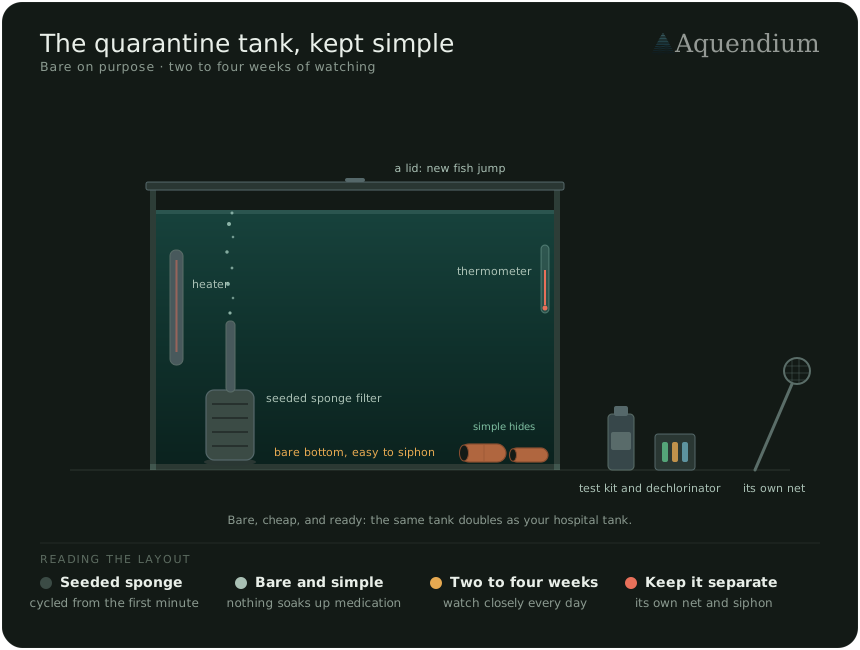
What you need:
- A small tank or food-grade tub, around 20 to 40 litres, sized to the fish you tend to buy. It does not need to be pretty; a plastic storage tub works fine and packs away between uses.
- A sponge filter. It is the ideal quarantine filter: gentle flow that suits stressed and small fish, no intake to injure them, and easy to pre-seed with bacteria. See the filter guide.
- A heater and thermometer, set to the species' normal temperature. Size the heater with the heater wattage calculator.
- A lid. Stressed new fish are jumpers.
- No substrate. A bare bottom lets you see and siphon out waste and uneaten food, and it lets you dose medication accurately.
- A couple of simple hides (a terracotta tube, a PVC elbow, a clean rock, or a silk plant) so the fish feels secure. Skip porous decor and live plants, which absorb medication.
- A liquid test kit (API Freshwater Master Test Kit) and Seachem Prime dechlorinator.
Keep it somewhere quiet and out of direct sun. Dim, calm surroundings lower stress, which is half the point of quarantine.
Keeping the tank cycled and ready
Here is the catch nobody mentions: a quarantine tank that sits empty is not cycled, so dropping a fish into it can expose it to ammonia, the very stress you are trying to spare it. You have three ways around this.
The other two options:
- Run it permanently. Some keepers keep their quarantine tank running all the time with a few hardy fish or shrimp, so it stays cycled and ready to clear out at short notice.
- Cycle it on the fly. With neither of the above, set the tank up fresh and keep ammonia and nitrite at zero by hand: dose bottled bacteria (Seachem Stability or Tetra SafeStart) for a head start, test daily, and do a water change with dechlorinated, temperature-matched water plus a dose of Seachem Prime (which detoxifies ammonia for around 24 hours; our water conditioner calculator gives the higher emergency dose) whenever either reads above zero.
That last approach is more work and less safe, so use the seeded sponge filter if you possibly can. Either way, the goal is to keep the new fish in already-cycled or carefully ammonia-controlled water, not to grow a fresh colony on its back. For the full picture, see the cycling guide and the water parameters guide.
The quarantine routine
With a ready tank, the routine is straightforward. Open each step.
Acclimatise into the quarantine tank
Acclimatise the new fish exactly as you would into a display tank: float the bag to match temperature, gradually mix in small amounts of tank water over 30 to 60 minutes, then net the fish out and release it, discarding the bag water rather than pouring shop water in. The full method is in the setup guide.
Keep the lights off and the tank quiet for the first day, and do not feed for the first 24 hours. A stressed fish will not eat, and uneaten food only fouls a small tank.
Observe closely every day
This is the whole purpose of quarantine, so look carefully each day for the early signs of trouble: white spots like grains of salt (ich), a fine gold dust (velvet), flicking or flashing against surfaces, clamped fins, rapid breathing, white stringy droppings (internal parasites), or gradual weight loss.
A fish that settles in, eats well, and shows nothing across the full period is almost certainly safe to move across. If something appears, see to medicate, or just observe below.
Feed well and keep the water pristine
Once the fish has settled, feed well to rebuild condition after the journey, and use the quiet time to coax fussy or wild-caught fish onto prepared foods (see the feeding guide).
Because the tank is small and lightly filtered, test the water and do regular small water changes to hold ammonia and nitrite at zero. A quarantine tank needs closer attention than a large, established display.
Decide, then move them across
Quarantine for at least two to three weeks, and four for wild-caught or visibly stressed fish. If it has stayed healthy and eating the whole time, acclimatise it into the display tank the same way you did into quarantine.
If anything appeared, treat it in the quarantine tank and restart the clock from when the symptoms clear. Never move a fish that is still recovering into your main tank.
Reset the tank between batches
Between groups of fish, strip and clean the quarantine tank: empty it, rinse everything with plain water (never soap), and let it dry out completely, which kills many pathogens. Re-seed a fresh sponge filter from your main tank before the next quarantine.
Keep the quarantine tank's own net and siphon, used only for that tank, so you never carry disease back to the display.
To medicate, or just observe?
The big question is whether to treat every new fish as a precaution, or only when a problem appears. For beginners, the answer is observe first. Medicating healthy fish stresses them, can breed resistant parasites, and risks harming them with the wrong treatment. A clean quarantine where nothing shows up is a success, not a wasted opportunity to dose something.
Some experienced keepers do run a prophylactic regimen, commonly a praziquantel-based dewormer for internal parasites and flukes, sometimes alongside a treatment for external parasites, on the logic that a few pathogens hide without obvious symptoms. It is a reasonable, more advanced approach, but only worthwhile if you understand the medications and dose them precisely.
When something does appear, identify it before you reach for a bottle. Match what you see to the symptom guide, then treat that, and only that.
Australian notes
Medication availability. Several treatments common overseas are restricted here. Methylene blue, aquarium salt, copper-based parasite treatments, and praziquantel dewormers are available in Australia, while antibiotics such as kanamycin and erythromycin need a vet's prescription. The diseases guide's Australian section has the detail, and for a serious case an aquatic vet (most easily found near the university veterinary programs in Brisbane, Sydney, and Melbourne) is a genuine option.
Quarantine matters even more for wild-caught fish, including native species, and for anything bought online or shipped interstate, all of which carry extra transport stress and mixing along the way.
A cheap tub does the job. A food-grade plastic storage tub from any hardware or department store, plus a heater and a sponge filter, makes a perfectly good quarantine tank. There is no need to buy a dedicated aquarium for the purpose.
Quarantine is the front line of fish health: pair it with the common fish diseases guide for identifying and treating anything that appears, the cycling guide for keeping the tank safe, and the filter guide for the all-important sponge filter. Browse fish to add (and quarantine) in the species directory.