How to deal with excess snails
One week there are a couple of snails you never bought; the next, the glass is crawling with dozens. A pest snail outbreak is one of the most common things to alarm a new keeper, and one of the most over-reacted to. The snails are rarely the real problem: they are a sign of one. Here is what they are, why they exploded, and how to bring the numbers down without nuking your tank.
Published 29 June 2026 · Last updated 24 July 2026 · 12 min read
First, are they actually a problem?
The first thing to know is that pest snails are not dangerous, and the same goes for most of the other creatures that turn up uninvited. Bladder and pond snails, ramshorn snails, and Malaysian trumpet snails do not bite fish and do not eat healthy plants. They graze algae, biofilm, dead leaves, and leftover food, and they do genuinely useful work clearing up waste and aerating the substrate. A few snails in a tank is normal, and fine.
What alarms people is the sudden explosion in numbers. But that is the snails responding to a surplus of food, not invading. A snail population can only grow as large as its food supply allows, so a boom is really the tank telling you there is too much uneaten food in it.
The one real downside is cosmetic: a lot of snails, plus their tiny shells and jelly-like egg clutches on the glass, can simply look untidy. That is a fair reason to reduce the numbers. It is not a reason to panic.
Which snail is it?
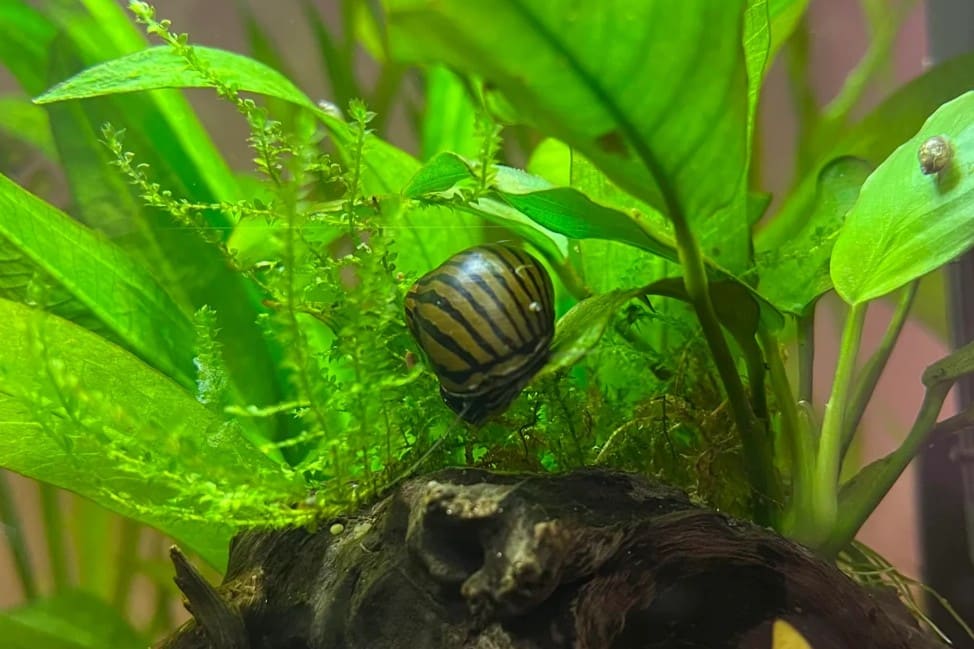
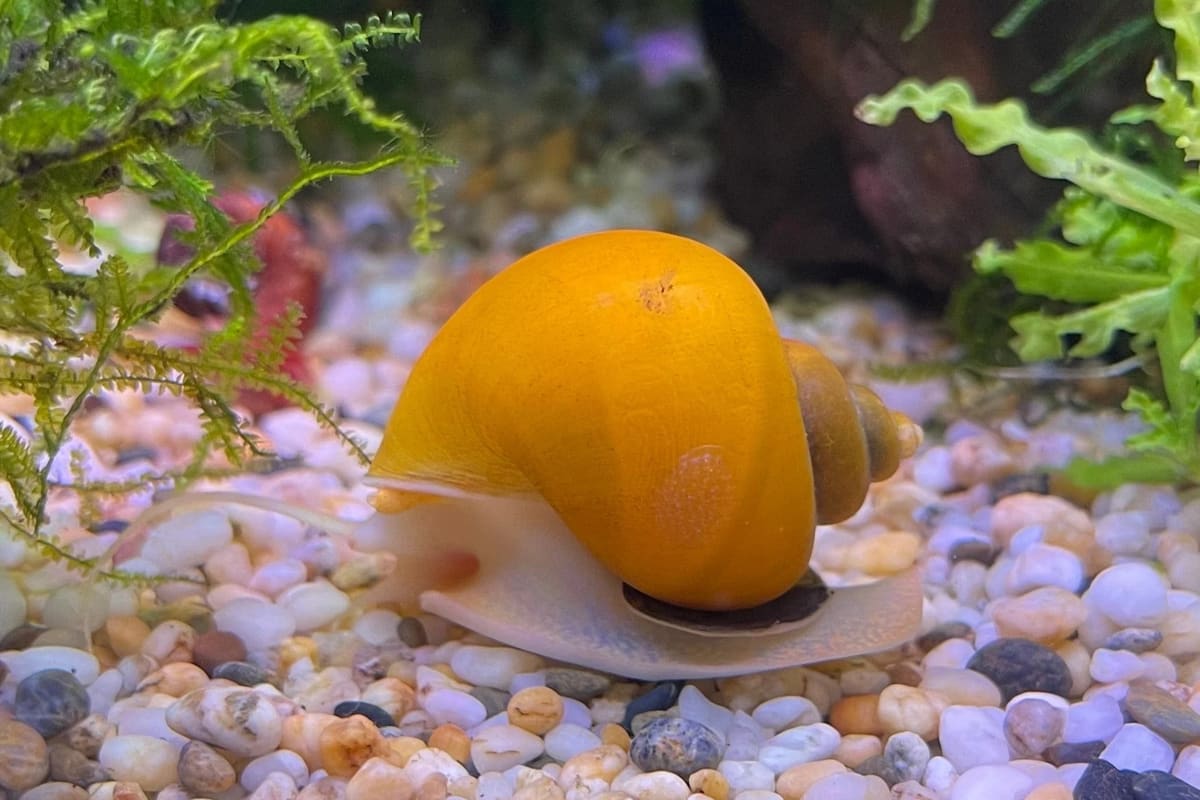
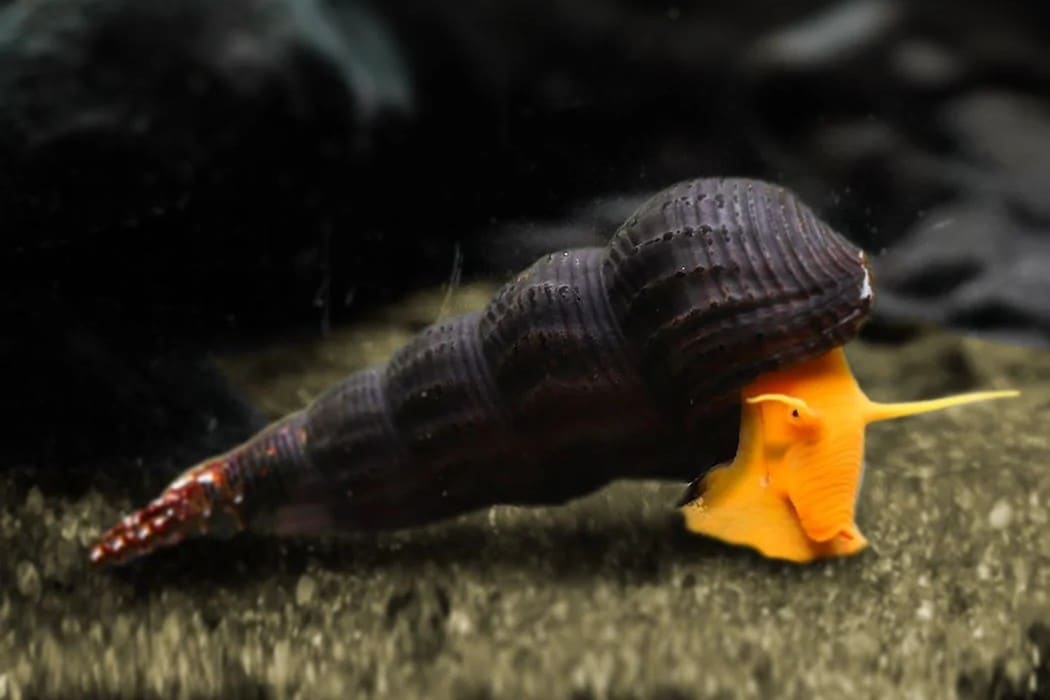
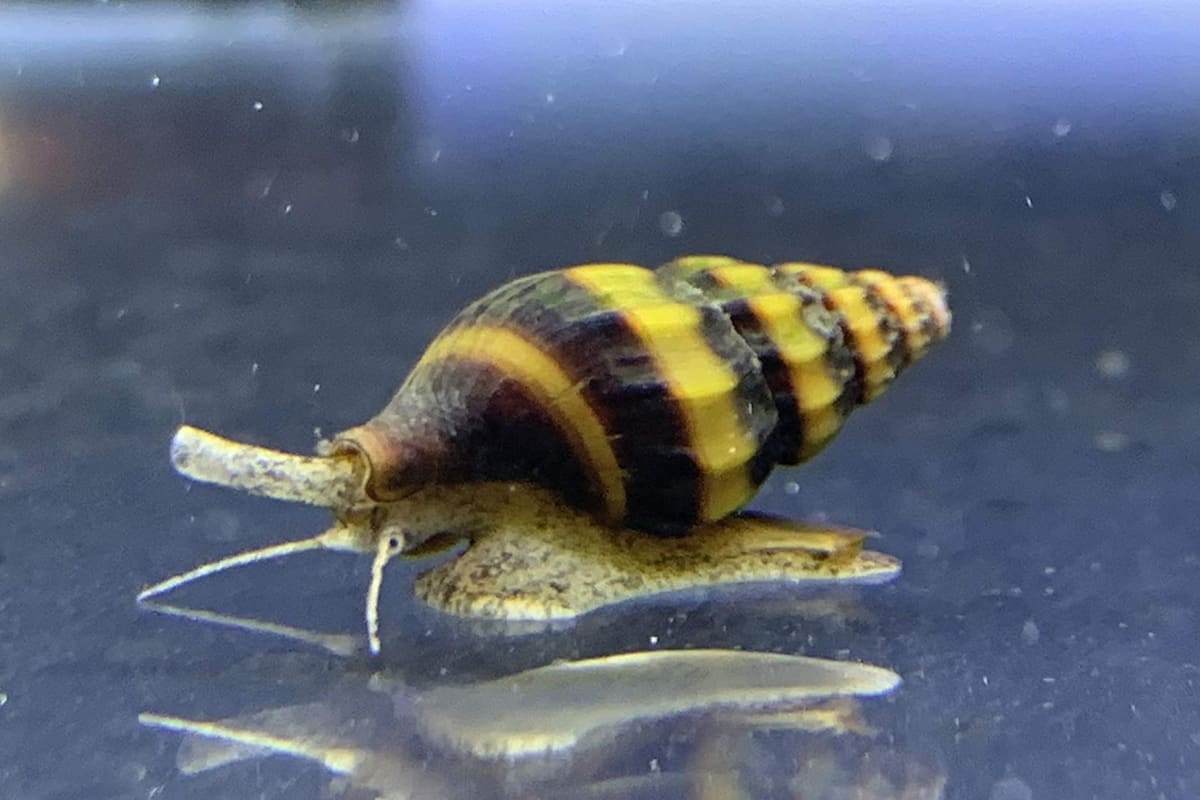
It helps to know which snail you are dealing with, and to be sure it is a pest snail rather than one you would actually want to keep. Click a photo to enlarge it, or the name beneath it to jump to that snail's details.
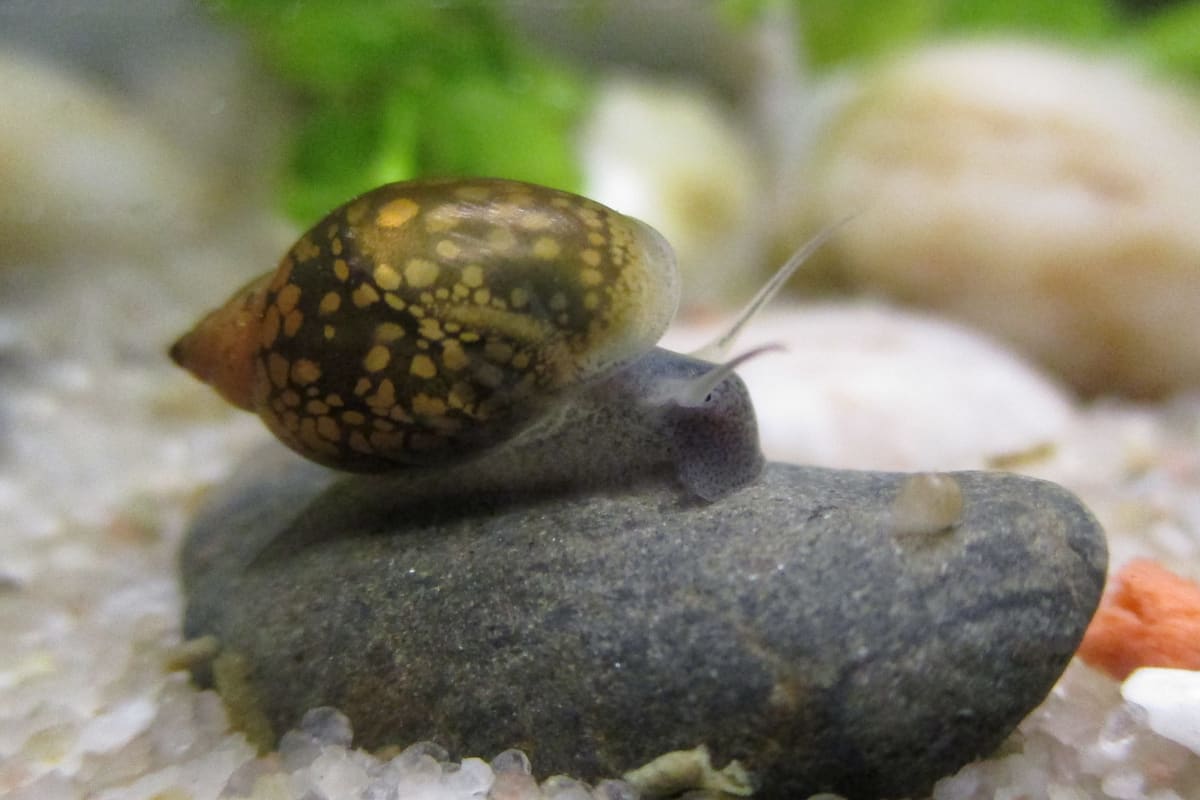
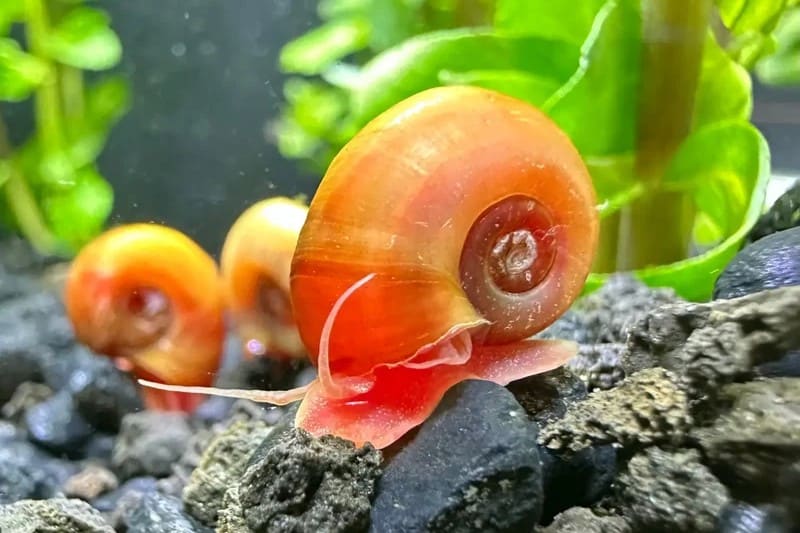
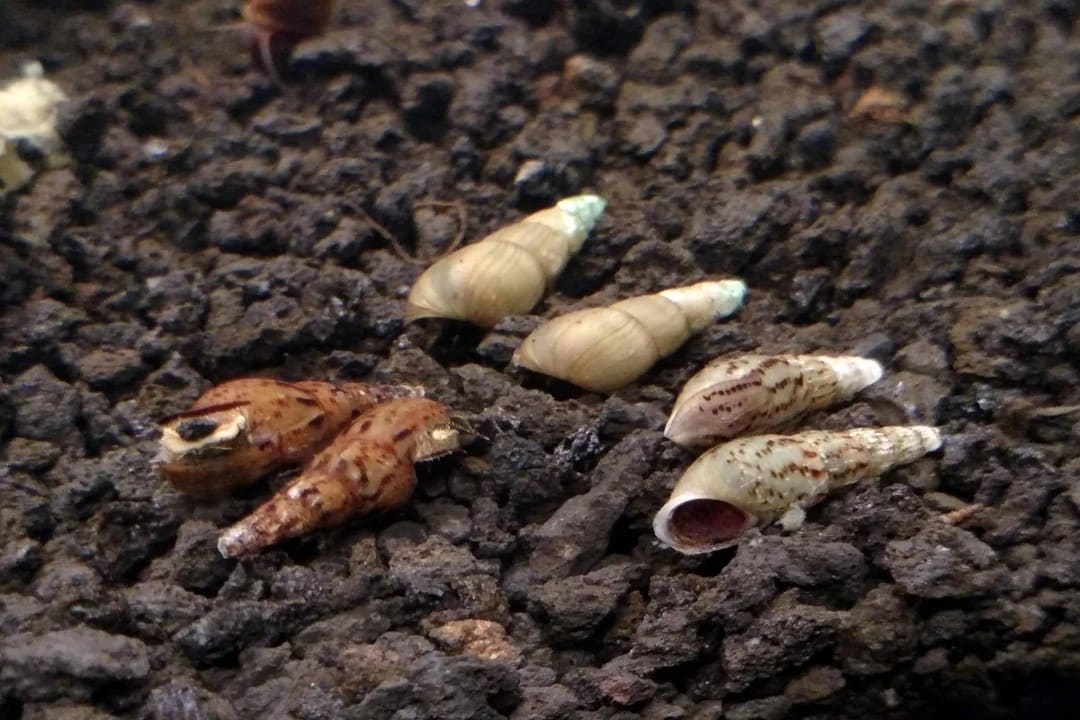
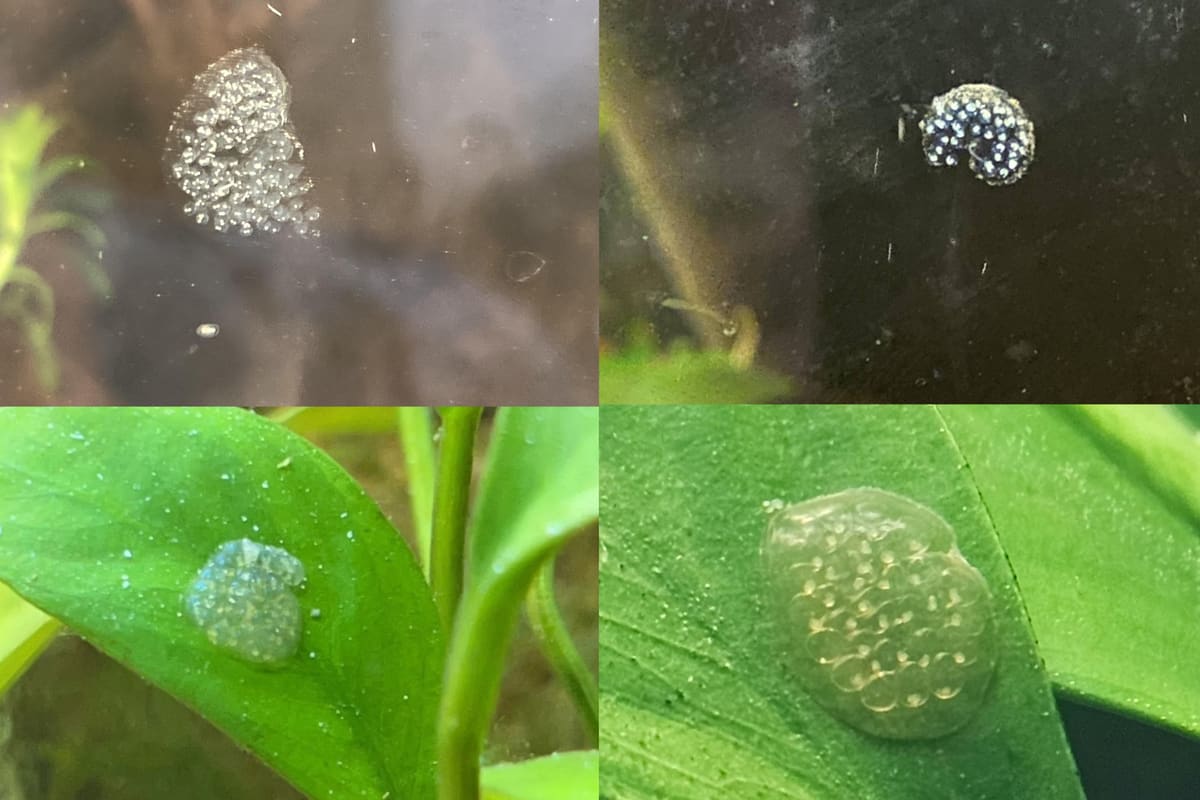
Bladder and pond snails
Two small, quick snails that cruise the glass and plants, and between them the cause of most outbreaks. A bladder snail has a thin, glossy, almost transparent shell, usually around 10 to 15 mm, with a gold-flecked body clearly visible through it. A pond snail grows larger, to 25 mm and some species far beyond, with a thicker, more solid shell. The snail on the card above is a bladder snail: the giveaways are the long, thread-like tentacles and the mottled body showing through a glassy shell.
Both are hermaphrodites that can fertilise themselves, so a single hitchhiker can populate a tank on its own. The population tracks the food supply exactly: a boom is overfeeding made visible. They are otherwise harmless, do not touch healthy plants, and quietly clear leftovers and biofilm. Cut the food and the numbers fall on their own.
Ramshorn snail
A flat shell coiled like a ram's horn, in brown through red, carried upright on a slower, deliberate snail. Ramshorns lay their eggs in small jelly-like clutches on glass and plant leaves, which is often the first sign they have arrived.
They are harmless grazers of algae, dead leaves, and leftovers, and plenty of keepers keep them deliberately. Like the bladder snail, they only boom when the tank is overfed.
Malaysian trumpet snail
A long, narrow cone shell on a snail you will rarely see in daylight: trumpet snails spend the day burrowed in the substrate and come out at night. If the gravel seems to sprout snails an hour after lights-out, this is your snail. They are live-bearing, so there are no egg clutches to spot, and they are prolific.
They do genuine good, turning over and aerating the substrate as they burrow. The honest catch: once established they are near impossible to fully remove, because traps and predators barely reach them in the gravel. Manage the numbers with feeding rather than aiming for eradication.
Nerite, mystery, and rabbit snails
The larger, distinctive snails you chose to add are never the outbreak. Nerite snails cannot breed in freshwater at all, and mystery and rabbit snails breed far too slowly to overrun anything.
The snails that explode are the small bladder, pond, and ramshorn snails and the burrowing trumpet snails above, all of which arrive uninvited. If your "infestation" is one of the bought snails, relax: nothing needs doing.
Bringing the numbers down
Reducing a snail population is a matter of removing the food source and then physically thinning the numbers. Open each approach.
Feed less
This is the only approach that addresses the cause. Snails breed to match the food, so when you cut the food, the population starves back down to whatever the tank can actually support.
How to do it
- Feed smaller amounts, less often (the feeding guide covers how much is right).
- Remove any food left uneaten after a couple of minutes.
- Vacuum leftover food and detritus out of the substrate during water changes.
It is slow, taking a few weeks to show, but it is the foundation. Every other method below works far better once the buffet is gone.
Trap and remove
Physically removing snails brings the numbers down quickly, and is oddly satisfying.
How to do it
- Drop a piece of blanched vegetable (zucchini, cucumber, or a lettuce leaf) into the tank at night. By morning it is covered in snails; lift it out and discard them. Repeat nightly.
- A commercial snail trap works on exactly the same principle.
- Pick or squash snails off the glass whenever you see them.
Trapping reduces but rarely eradicates, so pair it with feeding less. Do not crush a large number of snails and leave them to rot, as that fouls the water.
Add a predator
Several animals eat pest snails and keep them naturally in check. Choose one that genuinely suits your tank and that you want to keep long-term, not just for snail duty.
The options
- Assassin snails are the easiest fit: they hunt and eat pest snails, stay peaceful, and will not overrun the tank themselves. Slow but steady, and suited to most community tanks.
- Snail-eating loaches such as yoyo loaches, dwarf chain loaches, and clown loaches are enthusiastic hunters, but they need the right tank size and to be kept in groups.
- Dwarf pufferfish devour snails, but they need a dedicated species tank and are not community fish.
For most keepers, assassin snails are the simplest answer, and they leave your larger ornamental snails alone.
Keeping them out
The lasting fix is to stop new snails arriving and to keep the food under control.
Pest snails almost always hitchhike in as eggs on new plants, hidden on the undersides of leaves where you would never spot them. The obvious other source is overfeeding, which a correctly fed tank simply does not have.
Finally, do not set out to eradicate snails entirely. A small, stable snail population is beneficial and nothing to fight; it cleans up waste and grazes algae for free. It is only the overfed explosion that is worth managing, and once you have the feeding right, the tank settles into a quiet handful of snails on its own.
Australian notes
Never release them. Do not tip surplus snails, or any aquarium life, into waterways, stormwater drains, or the garden. Some aquatic snails are serious pests in Australian waterways. Bag and bin them, freeze them first, or feed them to other fish; crushed pest snails are welcome food for many species.
Know your apple snails. The mystery snail sold in Australian shops (Pomacea diffusa) is fine and legal, but the channelled apple snail (Pomacea canaliculata) is a declared pest that is illegal to keep or import. Buy from reputable shops, and never collect unknown snails from the wild.
Predators and plant dips are easy to find. Assassin snails and snail-eating loaches are stocked by Petbarn, Petstock, and dedicated aquarium shops, and plant dips and tissue-culture plants are widely sold for keeping hitchhikers out in the first place.
Excess snails almost always trace back to feeding, so start with the feeding guide. To stop them arriving on new plants, see planted tank basics and quarantining new fish. Browse snails and snail-eaters in the species directory.