How to dip new aquarium plants
Almost every unwanted hitchhiker in an aquarium, from pest snails to algae, arrived on a new plant. Dipping is the traditional defence: a short bath in something hostile enough to kill the hitchhikers but brief enough for the plant to survive. Done properly it works well. Done casually it kills plants. Here is how to do it properly, and when not to do it at all.
Published 2 August 2026 · Last updated 2 August 2026 · 8 min read
Do you actually need to dip?
Often, no. Start with the two measures that carry no risk at all.
Inspect and rinse everything. Hold each plant up to the light and check the undersides of the leaves, the crown, and among the roots. You are looking for snails themselves, small translucent jelly blobs (snail egg clutches), and tufts of algae. Pinch off any leaf carrying eggs, then rinse the whole plant thoroughly under running tap water, working the leaves gently apart. This alone removes most hitchhikers, and for a tank that already has a healthy snail population and stable algae, it is genuinely all you need.
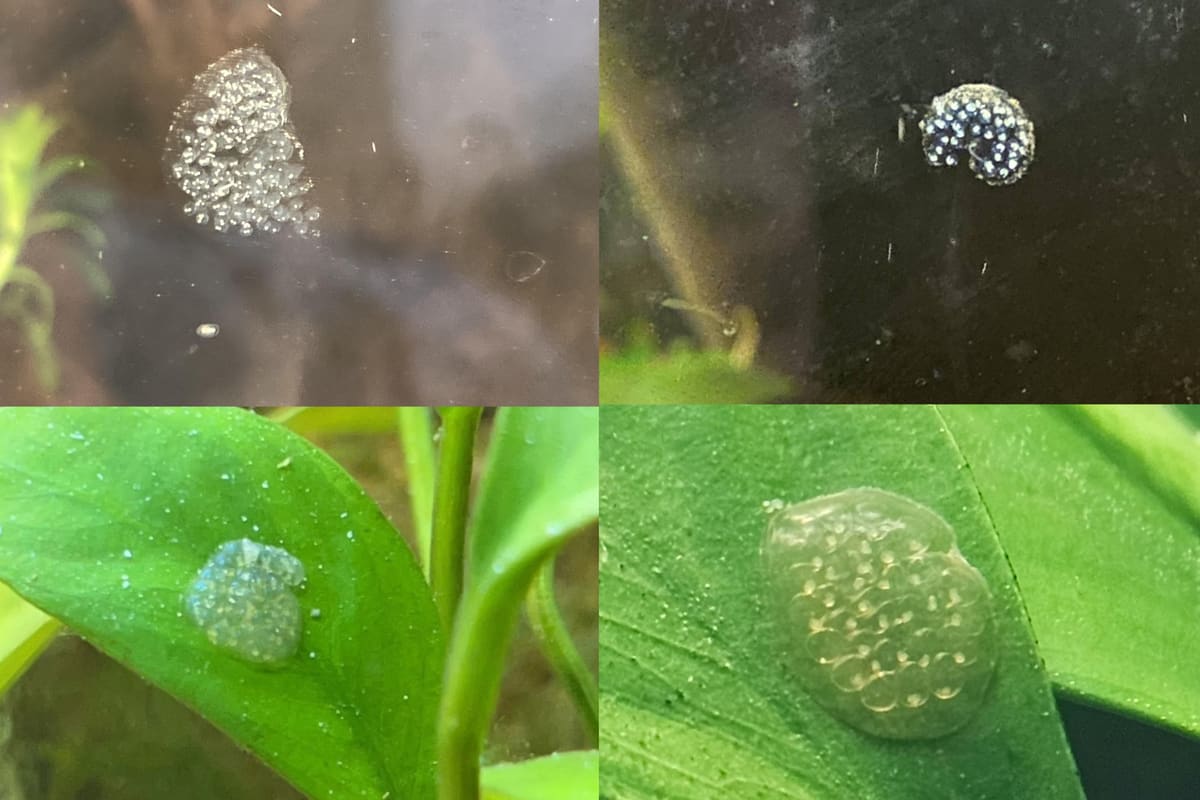
Dipping earns its place when the stakes are higher: plants going into a brand-new tank you want to keep snail-free, plants from a source tank you could see pests in, or plants headed for a display where an outbreak would be hard to unwind. If you are already dealing with an outbreak, see our pest snail guide; dipping prevents the next one rather than fixing the current one.
The risk, before you start
Every dip is a trade. The same chemistry that kills snails, eggs, and algae also attacks the plant, and the margin between "kills the hitchhikers" and "kills the plant" is measured in seconds and millilitres. That is why every method below states an exact strength and an exact time: they are limits, not suggestions.
Plant tolerance varies enormously:
- Tough, dip-tolerant plants: anubias, java fern, amazon swords, and most robust stem plants handle a properly diluted bleach dip well.
- Dip with caution: cryptocorynes tolerate the chemistry but often melt after any major change, dip included; they usually regrow from the roots. Use the short end of every time range.
- Do not bleach-dip: mosses, hornwort, cabomba, and other fine-leaved species, which shrug off almost nothing, and vallisneria, which is notoriously bleach-sensitive. For these, use an alum soak or rely on inspection and quarantine.
The bleach dip, step by step
The bleach dip is the standard because it is fast, cheap, and effective against nearly everything soft-bodied: snails, algae, and most other hitchhikers. Use plain household bleach only: the label should list sodium hypochlorite (about 4 to 5% in Australia) and nothing clever. No fragrance, no "thick" or gel formulas, no added detergents. Never mix bleach with any other cleaner or chemical.
- Mix the dip. In a bucket, mix 1 part plain bleach to 19 parts cool tap water. For example, 200 mL of bleach in 3.8 litres of water. Do not go stronger.
- Prepare the rescue bucket. Fill a second bucket with tap water and add a double dose of dechlorinator (Seachem Prime). This is what stops the clock on the bleach.
- Dip the plant. Submerge the leaves and stems and start timing: 60 to 90 seconds for most plants, up to 2 minutes for tough species like anubias and java fern. For rooted plants in delicate condition, hold the roots out of the solution and dip only the leaves.
- Rinse hard. Lift the plant straight into the rescue bucket and swish it for a good 30 seconds, then rinse under running tap water, then give it a final few minutes' soak in fresh dechlorinated water. The plant should carry no bleach smell by the end.
- Plant it, and expect a sulk. Some yellowing or a shed leaf in the first week is normal, especially on crypts. Healthy plants push new growth within a couple of weeks.
Discard the dip water down the drain when you are done, and rinse the bucket. Keep bleach, and the dip bucket, away from children, pets, and anything you cannot bleach-splash.
Gentler dips: alum and Condy's crystals
Two older remedies trade speed for gentleness. Both are easier on plants than bleach, and both are weaker against the worst hitchhikers, which is the deal you are making.
Alum: the slow, gentle soak
Alum (potassium alum, sold as a pickling and preserving powder) is the gentlest option that still does real work against snails. Dissolve 1 tablespoon of alum per 4 litres of water and soak the plant for 2 to 3 hours. For a suspected egg load on tough plants, the soak can run up to 24 hours, but a soak that long will stress delicate species, which defeats the purpose of choosing alum. Rinse well in dechlorinated water afterwards.
Alum is the right choice for the plants on the do-not-bleach list, and for anyone who wants a wide safety margin over maximum kill power.
Condy's crystals: the middle road
Condy's crystals (potassium permanganate) sit between alum and bleach: a proper disinfectant that most healthy plants tolerate. Dissolve a few crystals in a bucket of water until it turns a pale pink, the colour of weak cordial, not purple. Soak the plant for 10 to 15 minutes, then rinse in dechlorinated water; dechlorinator conveniently neutralises permanganate residue as well.
Treat the crystals with respect: potassium permanganate is a strong oxidiser that stains skin, clothes, and benchtops brown, and it must never be mixed with other chemicals. Buy it, use it, and store it as carefully as you would pool chemicals.
A brief word on the other two you will see recommended online: a hydrogen peroxide dip has its uses against algae on hardscape and tough leaves, but it is not a reliable snail or egg treatment, and a salt dip is simply a bad idea for plants, which handle salt worse than the snails do.
What no dip can promise
Here is the honest part. Dips reliably kill adult snails, juveniles, and most algae and soft-bodied hitchhikers. Snail eggs are a different story: the jelly coat that makes clutches easy to spot also shields the eggs inside, and a clutch tucked into a leaf joint can survive a textbook dip of any kind.
This is also why physical removal matters more than any chemical: a leaf carrying a visible egg clutch should be pinched off and binned, not dipped and hoped over.
Keep perspective, too. If a bladder snail does slip through, it is a cosmetic nuisance rather than a disaster, and a correctly fed tank will not let it become a plague. The pest snail guide covers that side of the story.
Australian notes
Everything here is a supermarket or pharmacy purchase. Plain unscented household bleach is a couple of dollars at Coles or Woolworths (check the label for sodium hypochlorite with no additives). Alum is sold as potassium alum in the spice or preserving aisle and at pharmacies. Condy's crystals are a pharmacy item; you may need to ask at the counter. Aquarium shops also sell commercial plant dips; they are convenient, and used per the label they do the same job as the methods above.
Tissue culture is easy to buy here. Australia's plant import rules mean locally grown stock dominates the market, and tissue-culture cups are stocked by most dedicated aquarium shops. See our Australian aquarium plants guide for the legal side, including the national weed list.
Dispose of everything responsibly. Dip water can go down the drain. Snails, eggs, and plant trimmings go in the bin (freeze snails first if you want to be humane about it), never into waterways, ponds, or the garden: several aquarium species are declared pests in Australian waterways.
Dipping is one piece of keeping hitchhikers out: see dealing with pest snails for the outbreak side, planted tank basics for choosing and keeping the plants themselves, aquarium plants in Australia for the buying rules, and quarantining new fish for the livestock equivalent. Browse species in the species directory.