Aquascaping for beginners
Aquascaping is the craft of arranging plants, rock, wood, and substrate into a deliberate underwater landscape: the art side of the planted tank. The lush, natural look most people picture, a scene that could be a slice of riverbank or forest floor, was shaped largely by one person, the Japanese aquarist Takashi Amano, whose Nature Aquarium changed the hobby. This guide covers what aquascaping is, the main styles, the handful of composition rules that make a layout work, and how to plan and plant your first scape. It is the design companion to our planted tank basics guide, which covers growing the plants themselves.
Published 1 July 2026 · Last updated 1 July 2026 · 12 min read
What aquascaping is, and the Nature Aquarium
Every planted tank has plants in it. An aquascape has them arranged: a layout with a deliberate shape, a focal point, and a sense of place, so the finished tank reads as a landscape rather than a box of decorations. The hobby treats it as a visual craft, closer to bonsai or landscape gardening than to fishkeeping, even though healthy fish and clean water still underpin it all.
The style most people have in mind traces back to Takashi Amano (1954 to 2015), a Japanese landscape photographer and aquarist who founded the company ADA (Aqua Design Amano). Amano's Nature Aquarium recreated real natural scenes underwater, forest floors, mountain valleys, riverbanks, using driftwood, stone, and carpeting plants, and brought a Japanese aesthetic sensibility to it: asymmetry, restraint, and wabi-sabi, the beauty of natural and imperfect things. He founded the International Aquatic Plants Layout Contest (the IAPLC), still the largest aquascaping competition in the world, and even the humble Amano shrimp, which he championed as a natural answer to algae, carries his name. His influence is the reason the "natural" look is now the default.
None of this requires a big budget or a high-tech tank. Aquascaping is a way of thinking about the layout, and you can apply it to a simple low-tech tank of hardy plants just as much as to a competition scape.
The main aquascaping styles
It helps to know the main styles before you start, so you can aim at a look you actually like. These are the ones you will hear named most often.
| Style | The look | Good first scape? |
|---|---|---|
| Nature Aquarium (Amano) | A natural scene from wood, stone, and plants, asymmetric and organic | Yes, the usual starting point |
| Iwagumi | Minimalist, stone only, a low carpet, and lots of open space | Looks simple, but the carpet usually needs strong light and CO2 |
| Dutch | Dense terraced "streets" of colourful stem plants, no hardscape | No, it takes real plant-growing skill |
| Jungle | Untamed, dense, and overgrown, with large hardy plants | Yes, forgiving and low-effort |
| Biotope | A faithful copy of one real habitat, matching fish, plants, and hardscape | Moderate, it takes research |
Most beginners are happiest starting with a wood-based Nature Aquarium or a jungle: both are forgiving, both work with hardy plants, and both teach you the composition ideas below without demanding a carpet.
The rules that make a layout work
A layout looks "right" for reasons you can learn. None of these are hard, and you only need a few of them.
One focal point. Give the eye a single main point of interest: a striking piece of wood, a standout stone, or a splash of a red plant. One is enough. Two competing focal points fight each other and the layout falls flat.
Place it off-centre. Imagine the tank split into thirds, across and down, like a noughts-and-crosses grid. Put the focal point where the lines cross, about a third of the way in, never dead centre. This is the rule of thirds, and it is the single most useful trick in aquascaping.
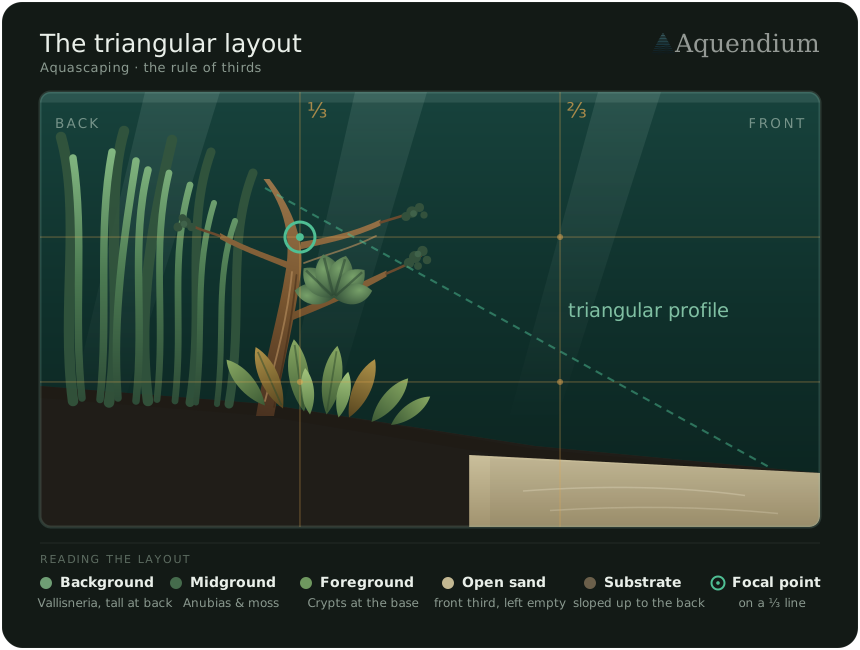
Choose a shape. Most scapes follow one of three profiles. A concave layout is a valley: taller sides and an open, lower middle. A convex layout is an island or mound: a raised middle falling away to the sides. A triangular layout slopes from high on one side down to low on the other. The triangle is the most forgiving to start with, because a single tall focal point on one side does most of the work.
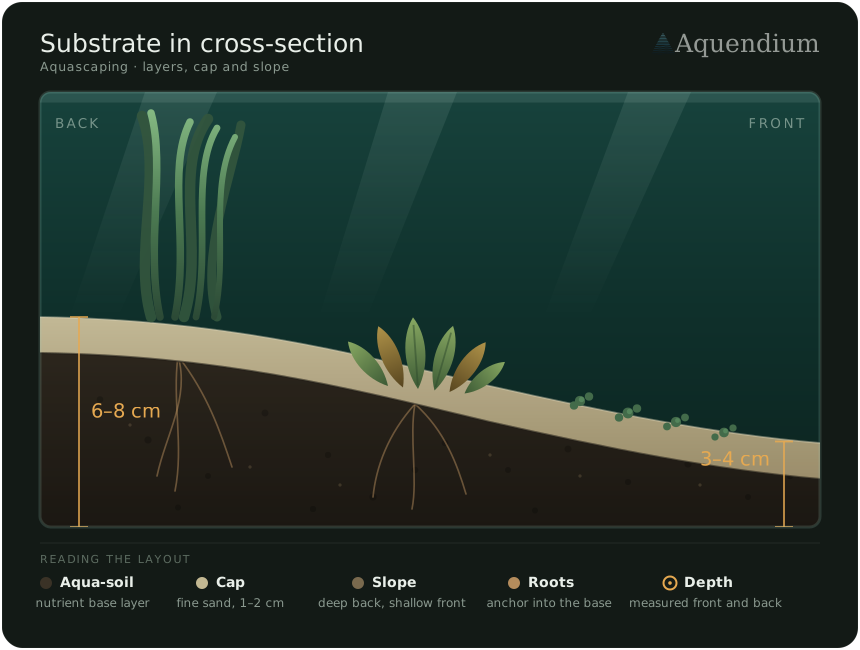
Create depth. The trick that makes a shallow tank look like a deep landscape: slope the substrate up toward the back, place larger and coarser materials at the front and finer ones behind, and keep small-leaved plants in front of big-leaved ones. Building in a foreground, a midground, and a background, rather than one even layer, is what gives a scape its sense of distance.
Leave open space. Empty areas, a swept sand foreground, a gap of open water, are part of the design, not a failure to fill the tank. Amano's scapes are famous for this restraint. Resist the urge to plant every corner: the open space is what lets the rest breathe.
Hardscape: rock and wood
Hardscape is the stone and wood that form the "bones" of a layout. Arrange it first, dry, in the empty tank, and take photos as you go. It is far easier to move a rock around now than once it is buried in planted substrate, and the hardscape decides the whole composition.
Rock. Popular aquascaping stones include seiryu (grey, sharp-lined "mini landscape" rock), dragon stone (knobbly tan Ohko stone), lava rock, and elephant skin stone. Group them like a natural outcrop: one main stone with a few smaller supporting stones, all with their lines and grain flowing the same way, not scattered at random angles.
Wood. Common choices are spider wood (fine, twiggy branches), redmoor, manzanita, and Malaysian driftwood. Wood adds height and leads the eye, and epiphyte plants like Anubias, Java fern, and mosses are tied or glued straight onto it. Two things to expect: fresh wood floats until it waterlogs, so soak it or wedge it down for a week or two, and most wood leaches tannins that tint the water tea-brown for a while. The tint is harmless and many aquascapers like it, but it clears with water changes and, if it bothers you, with Seachem Purigen in the filter.
Substrate and choosing plants
With the hardscape set, the substrate and plants bring it to life. Our substrate guide covers the options in full, but for a planted scape the short version is: a nutrient aqua soil (such as Fluval Stratum, Tropica Aquarium Soil, or ADA Aqua Soil) grows plants best and can be sloped and sculpted, while an inert sand or gravel works fine for easy plants if you add root tabs. Slope whichever you choose up toward the back for depth, and work out how much to buy with the substrate calculator.
Choose plants by the job they do in the layout rather than picking them one by one:
| Role | What it does | Easy, low-tech picks |
|---|---|---|
| Foreground | Low cover along the front, or open sand | Dwarf sagittaria, Marsilea, a carpeting moss (true carpets need CO2) |
| Midground | Fills the middle and softens the hardscape | Anubias, Cryptocoryne, Bucephalandra, attached to wood or rock |
| Background | Height and a leafy backdrop | Vallisneria, Amazon sword, Java fern, hardy stems |
For a first scape, lean on hardy, low-light plants (Anubias, Java fern, Cryptocoryne, Vallisneria, and mosses). They thrive without pressurised CO2 and forgive beginner mistakes. Bright carpets and red plants are beautiful but usually demand strong light plus CO2, which our lighting and CO2 guides cover; there is no shame in going low-tech and enjoying an easier tank.
Planting it, and growing it in
Plant into damp, not flooded, substrate: fill the tank just enough to wet the soil, which makes planting far easier, then top it up afterwards. Use aquascaping tweezers to push rooted plants and stems into the soil in small clumps. Epiphytes are different: tie or glue Anubias, Java fern, and Bucephalandra onto wood or stone and never bury the rhizome (the thick horizontal stem), or it rots. Our planted tank basics guide has the full planting detail.
Then comes the part beginners find hardest: patience. A new scape looks sparse and a little bare, and that is normal. Plants need weeks to root, settle, and spread, and a young tank often passes through an algae phase while it finds its balance. Keep the lighting modest, do not overfeed, run regular water changes, and let it come good rather than reaching for a quick fix (our algae guide covers this stage).
A gentle cleanup crew helps the scape settle and keeps surfaces clean without wrecking the plants: Amano shrimp (Amano's own algae answer, and voracious grazers), otocinclus, and nerite snails are the classic trio. See our shrimp guide before adding them, and remember they, too, go in only after the tank has cycled.
Your first aquascape
The best first scape is a simple one. Do not open with a competition Dutch tank or a demanding hairgrass carpet: you will fight algae and melting plants and lose heart. Build something forgiving, learn how plants grow in your tank, and let your ambitions follow your experience.
A reliable starting recipe is a triangular, wood-based nature scape. Set a single characterful piece of spider wood to one side as the focal point, roughly on a rule-of-thirds line. Tie a moss and a few Anubias onto the wood, tuck some Cryptocoryne around its base, and plant a stand of Vallisneria in the back corner behind it. Leave the front third as open sand. That is a complete, good-looking layout with no CO2, only moderate light, and nothing but hardy plants, and it will keep improving for months as the plants fill in.
Above all, treat the scape as something you grow, not something you install. You will re-trim, replant, and nudge things as it matures, and that ongoing shaping is the craft. When you are ready to push further, into carpets, high-tech growth, forced-perspective hardscape, and the finer points of composition, our advanced aquascaping guide picks up where this one leaves off.
Aquascaping in Australia
The single most important thing to know as an Australian aquascaper is that many popular aquascaping plants cannot legally be imported into Australia. Biosecurity rules bar a long list of aquatic plants (some are declared weeds), so plants you see in overseas videos may simply not be available here, and importing them yourself is illegal. Buy from Australian aquascaping shops and stick to locally-grown or tissue-culture stock. Tissue-culture plants have a bonus: grown sterile in a lab, they arrive free of snails, algae, and pests.
On water, remember the hardscape warning above. Much of the country runs hard, alkaline tap water, and hardness-raising stone pushes it further, so favour an inert rock like dragon stone or lava unless you specifically want to keep hard-water species. Australian retailers stock the usual dragon stone, seiryu, spider wood, and aqua soils, and the local scene is active: Australian aquascapers enter Amano's IAPLC every year, and clubs and online groups are the fastest way to learn what grows well in local conditions.
Keep going with planted tank basics, choosing a substrate, and advanced aquascaping, or browse the species directory.